Metal Roof vs Asphalt Shingles
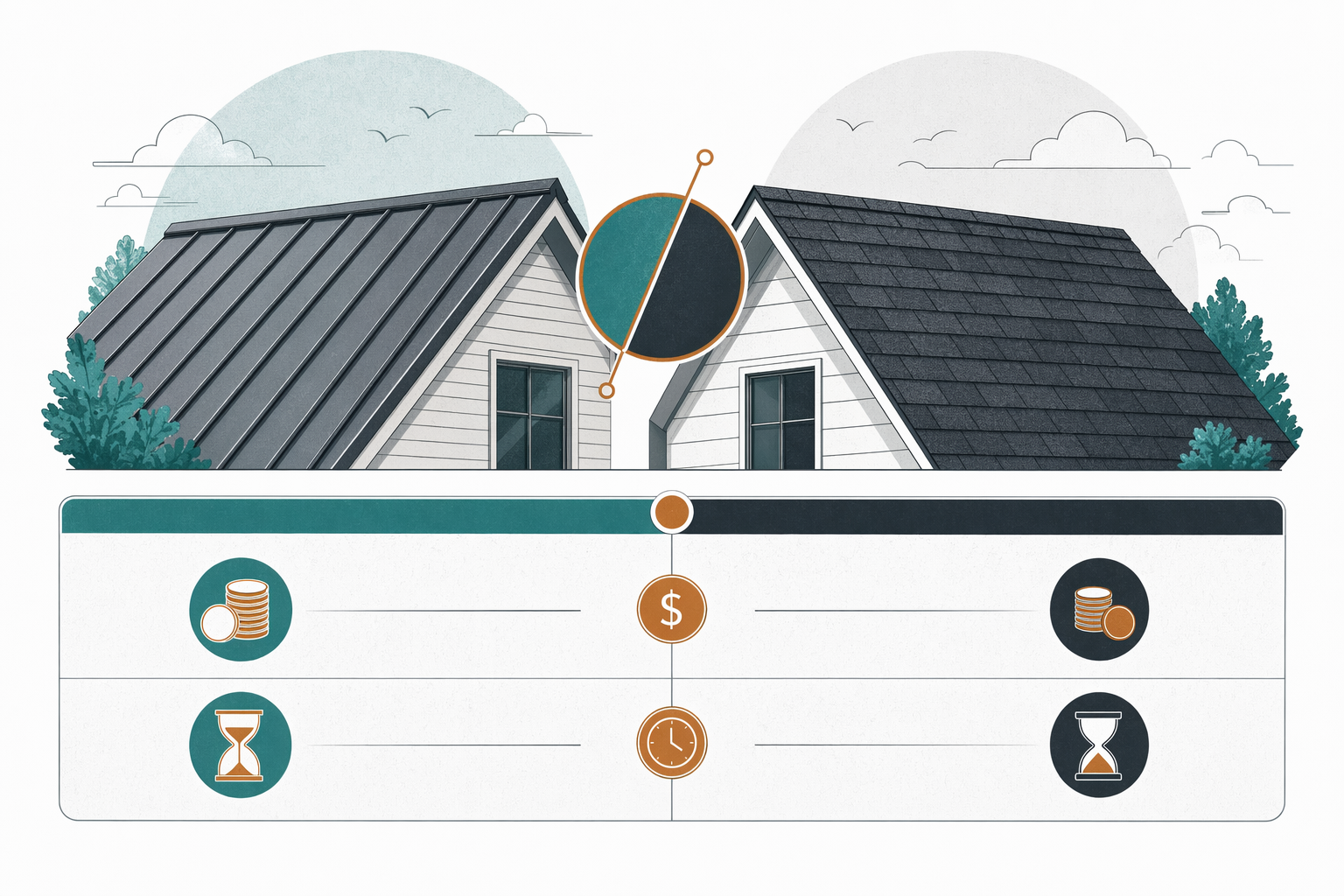
Both can be the right choice. **Metal usually costs more up front but can last much longer**, while asphalt is often easier on the budget today. The smart pick depends on how long you plan to stay, your roof shape, your climate, and what you can comfortably spend now.
The short truth: which one is better?
There is no one winner for every home.
Metal roofing is often the better long-term product. It can last about 40-70 years, stands up well to many weather conditions, and usually needs fewer full replacements over time. But it comes with a real up-front premium.
Asphalt shingles are often the better short-term value. They usually cost less to install now, repairs are familiar to many roofers, and they make sense if your budget is tight or you may move in the next several years.
If you want the simple version:
- Choose metal if you plan to stay a long time, want a longer service life, and can handle the higher initial cost.
- Choose asphalt if you need the lower up-front price, may sell sooner, or do not want to stretch your budget.
If you want a deeper cost breakdown, see roofing cost ranges.
Metal vs asphalt at a glance
Here is the honest side-by-side view. These are typical installed ranges, not quotes. Real pricing depends on roof size, pitch, the metal and coating chosen, tear-off, and your area.
| Category | Metal roofing | Asphalt shingles |
|---|---|---|
| Typical installed cost | $5-$18 per sq ft depending on profile | $4-$8 per sq ft |
| Common types | Corrugated/ribbed, metal shingle, standing seam | Architectural and 3-tab shingles |
| Lifespan | About 40-70 years | About 15-25 years |
| Up-front budget | Higher | Lower |
| Long-term replacement cycle | Usually fewer full replacements | Usually more frequent replacement |
| Storm resistance | Often strong, varies by product and install quality | Can perform well, but may be more vulnerable to blow-off and aging |
| Appearance | Clean modern lines or shingle-style options | Familiar traditional look |
| Noise | Usually not a major issue with proper attic and roof assembly | Familiar sound profile |
| Weight | Often lighter than many people expect | Common, widely accepted roofing choice |
| Installer skill need | Very important for details and flashing | Also important, but more common trade skill |
A few price points homeowners ask about most:
- Corrugated/ribbed metal: about $5-$9 per sq ft installed
- Metal shingles: about $9-$14 per sq ft installed
- Standing seam: about $10-$18 per sq ft installed
- Asphalt shingles: about $4-$8 per sq ft installed
If you are comparing styles, these pages can help: standing seam and metal shingle.
Where metal wins, and where asphalt wins
Homeowners get burned when they only look at the first number on the estimate. You need to match the roof to your goals.
Metal usually wins when:
- You expect to stay in the home a long time.
- You want a roof that may last 40-70 years instead of around 15-25 years.
- You like the look of standing seam or want a more durable premium roof system.
- Your climate brings strong sun, heavy rain, snow, or repeated weather stress.
- You are willing to pay more now to reduce the chance of another full replacement sooner.
Asphalt usually wins when:
- You need the lowest up-front cost.
- You may move in a shorter time frame.
- Your roof is complex and you want the broadest pool of installers.
- You want a familiar appearance that fits many neighborhoods.
- You simply do not want to pay the metal premium.
That last point matters. Metal is not always the smart call. If paying extra for metal would strain your finances, asphalt may be the better and safer choice. A good asphalt roof installed correctly can still serve a home well.
You can also read a longer breakdown at metal vs asphalt.
What affects the real price more than people expect
Two homes on the same street can get very different numbers. That is normal.
The final estimate usually changes because of:
- Roof size: More square footage means more material and labor.
- Roof pitch and complexity: Steeper roofs, valleys, dormers, skylights, chimneys, and cut-up designs take more labor.
- Tear-off needs: Removing old roofing and disposing of debris adds cost.
- Material choice: Corrugated/ribbed, metal shingles, and standing seam do not cost the same.
- Gauge and coating: Thicker metal and better coatings can affect price and performance.
- Underlayment and trim details: Flashing, ventilation parts, edge metal, and penetrations matter.
- Local labor market: Prices vary by region and season.
This is also why you should not compare estimates by bottom-line price alone. Ask every roofer to put these details in writing:
- Exact roof system and product name
- Metal type, gauge, and coating
- Tear-off and disposal scope
- Flashing and trim details
- Underlayment included
- Warranty terms
- Permit responsibility
- Total price and payment schedule
Always hire licensed, insured, bonded roofers and verify the license and insurance yourself. Follow local permits and code. This guide can help: how to vet a metal roofer.
How to choose without overthinking it
If you are stuck, use this simple filter.
Pick metal if most of these are true:
- You plan to stay 10+ years.
- You can afford the higher up-front cost without stress.
- You care more about long service life than the cheapest install.
- You are willing to be selective about installer quality.
Pick asphalt if most of these are true:
- You need to control the budget now.
- You may sell sooner.
- You want a practical, proven, lower-cost roof.
- You would rather avoid paying more today for benefits you may not use long enough to value.
Then do this next:
- Get at least 2-3 written estimates.
- Compare scope, not just price.
- Verify each roofer is licensed, insured, bonded.
- Check permits and local code requirements.
- Do not hand over a deposit until the material specs, warranty, scope, and price are in writing.
SeamRidge is a free matching service. We help you understand your options and get connected with roofers. You compare estimates, you choose who to hire, and you hold the final payment. If you want to start, use free matching.
In plain English
If you want the lower price today, asphalt is often the practical choice. If you plan to stay longer and can afford more up front, metal may pay off in service life. Get 2-3 written estimates, verify license and insurance yourself, compare the full scope, and choose the roofer you trust.