Standing seam metal roofing
Standing seam is one of the longest-lasting metal roof systems you can buy, but it is not cheap. If you want a clean look, hidden fasteners, and a roof that can last decades, this is the metal style many homeowners start with.
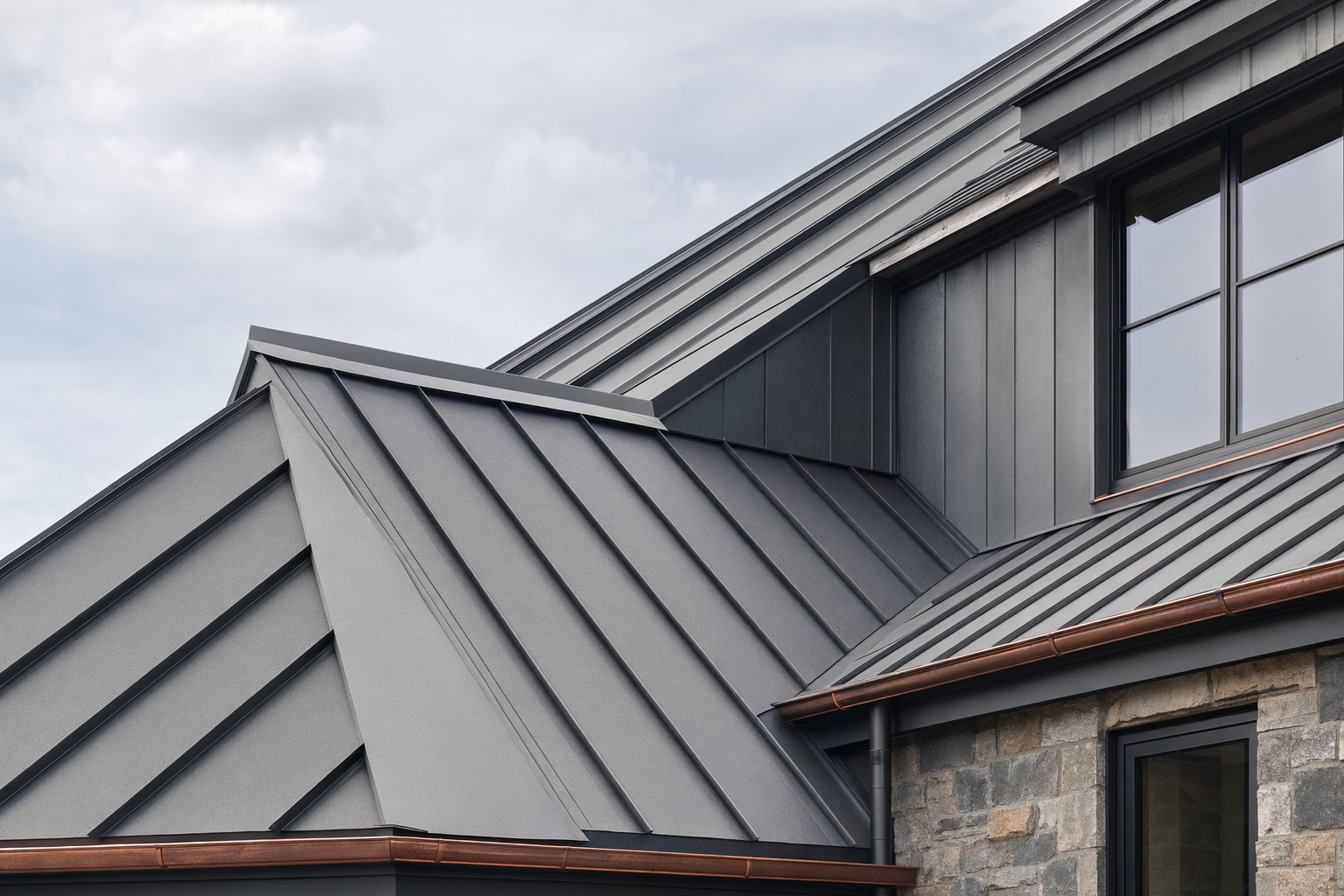
What standing seam means
A standing seam metal roof uses tall vertical seams that lock panels together. The fasteners are usually hidden under those seams instead of exposed on the face of the panel.
That detail matters. Hidden fasteners generally mean fewer places for water to work in over time, and a cleaner look from the street. It is one reason standing seam often costs more than corrugated or ribbed metal roofing.
Most residential standing seam roofs are made from steel or aluminum with a factory-applied coating. Panels run from the eave up toward the ridge. The seams stand up above the flat part of the panel, which is where the name comes from.
This is a good fit for homeowners who want:
- a modern, clean appearance
- a longer service life than asphalt in many cases
- less concern about exposed screw maintenance
- better performance on many roof shapes when installed correctly
It is not automatically the best choice for every home. If your budget is tight or you may move soon, asphalt can still be the smarter buy. You can compare the tradeoffs here: metal vs asphalt roofing.
How the system works on a house
Standing seam is more than just metal panels. It is a roof system with parts that need to work together.
- Deck and underlayment: The roofer checks the roof deck, replaces damaged wood if needed, and installs underlayment.
- Trim and flashings: Edges, valleys, penetrations, and transitions get metal flashings made for the system.
- Panels and clips: Panels are attached with clips or fastening methods designed for expansion and contraction.
- Seams are formed or locked: Depending on the product, seams may snap together or be mechanically seamed.
- Ventilation and details are finished: Ridge caps, pipe boots, and other details are completed.
Why this matters: metal expands and contracts with temperature changes. A proper standing seam system is designed to handle that movement. Cheap shortcuts on clips, trim, underlayment, or flashing can lead to leaks, noise, or panel issues even if the roof looks fine at first.
On many homes, the difference between a good metal roof and a frustrating one is not the panel color. It is the install quality, the details around penetrations, and whether the roofer follows local code and permit rules. Ask how permits are handled in your area and review local requirements if you need a starting point: metal roof permits guide.
Typical cost range in the US
For most homeowners, standing seam metal roofing typically runs about $10-$18 per square foot installed.
That is a broad estimate, not a quote. The real price depends on:
- roof size
- roof pitch and complexity
- the metal chosen, such as steel or aluminum
- panel width and profile
- coating and color
- tear-off of old roofing
- underlayment and decking repairs
- trim, valleys, skylights, chimneys, and other details
- your local labor market
A simple example: if a home has about 2,000 square feet of roof area, a rough installed range might land around $20,000-$36,000 before any unusual repairs or upgrades. Complex roofs can go higher.
That is clearly more up front than asphalt, which often lands around $4-$8 per square foot installed. So yes, there is a real metal premium. SeamRidge will never pretend otherwise.
The reason some homeowners still choose standing seam is lifespan and maintenance profile. If you plan to stay a long time, the math can make more sense. If you need the lowest upfront cost, it may not. For a broader look at metal price ranges, see metal roofing costs.
Because pricing varies so much, get the panel type, gauge, coating, underlayment, trim package, warranty terms, tear-off, and cleanup in writing before you put down any deposit.
How long it lasts and what affects lifespan
A properly installed standing seam metal roof will often last about 40-70 years. That is much longer than the roughly 15-25 years many asphalt shingle roofs deliver.
But lifespan is never just about the material. It depends on:
- climate and storm exposure
- coastal salt air or industrial pollution
- panel metal and thickness
- paint system or protective coating
- installation quality
- attic ventilation and moisture control
- maintenance of flashings, sealants, and penetrations
In plain terms: a premium panel installed badly can fail early, while a solid panel installed well can serve a home for decades.
Also, metal roofs are not maintenance-free. They are usually lower maintenance, but homeowners should still have the roof inspected after major storms and every so often as it ages, especially around boots, sealants, valleys, and wall transitions.
If long life is your main reason for considering metal, read more about realistic expectations here: metal roof lifespan.
Pros and cons homeowners should weigh honestly
Pros
- Long service life when installed correctly
- Hidden fasteners on many systems, which can reduce exposed-screw maintenance concerns
- Clean appearance that works well on modern, farmhouse, and many simple rooflines
- Good shedding of rain and snow on appropriate slopes and details
- Potential long-term value for owners who expect to stay put for many years
Cons
- Higher upfront cost than asphalt and many other roofing options
- Installation quality matters a lot; bad details can create expensive problems
- Not every contractor is truly experienced with standing seam systems
- Repairs and modifications can be more specialized than patching common shingles
- Noise concerns come up often; proper assembly helps, but expectations should be realistic
- Not always the best budget choice for homeowners planning a short stay
This is the honest bottom line: if you want the cheapest roof today, standing seam is usually not it. If you want a roof that may last much longer and you are willing to pay more now for a higher-end system, it can be a strong option.
What to ask before you hire a roofer
When you compare roofers, slow down and ask direct questions. You are not just buying metal panels. You are buying the install details.
Ask for these items in writing:
- the metal type being proposed
- the panel gauge or thickness
- the coating/paint system and color
- whether the system is snap-lock or mechanically seamed
- the full scope of work, including tear-off, underlayment, flashing, trim, ventilation, and cleanup
- the warranty details for both materials and workmanship
- who handles permits and inspections
- estimated start and finish timing
- total price and payment schedule
Also ask:
1. Are you licensed, insured, and bonded for this work in my area?
2. Can you show recent standing seam projects similar to my roof shape?
3. How do you flash chimneys, skylights, valleys, and pipe penetrations?
4. What underlayment are you including?
5. Will you inspect the deck and price any wood replacement separately?
Always verify license and insurance yourself. Do not rely only on a verbal yes. A good contractor should expect you to check.
If you want help comparing local options, get matched with licensed, insured, bonded metal roofers. The matching service is free to homeowners. You compare estimates, choose who to hire, and hold final payment.
How to vet estimates without getting burned
The cheapest estimate is not always the best value, and the highest price is not always the best roof.
Use this simple filter:
- Compare the same system. Make sure each estimate is for similar panel type, gauge, coating, underlayment, and trim.
- Look for missing scope. Low numbers often leave out tear-off, flashing upgrades, permit costs, or deck repairs.
- Read the warranty language. Know what is covered, by whom, and for how long.
- Check paperwork. Verify license, insurance, and bonding yourself.
- Review payment terms. Be cautious if a contractor wants a large deposit before materials, permits, and schedule are clearly documented.
A few practical red flags:
- pressure to sign today
- vague product descriptions like "premium metal roof" with no gauge or coating named
- no local address or no proof of insurance
- refusal to explain flashing details
- unwillingness to put scope and price in writing
If you want a deeper checklist, use this guide on how to vet a metal roofer.
SeamRidge does not install roofs or tell you which bid to accept. We help you understand the choices and connect with roofers so you can compare them carefully.
In plain English
Standing seam is a high-end metal roof with hidden fasteners that usually costs more now but can last much longer than asphalt. Get a few written estimates from licensed, insured, bonded roofers, compare the metal type, gauge, coating, warranty, and full scope, and choose only after you verify the paperwork yourself.