Metal shingles & metal tiles
Metal shingles and metal tiles give you the look of shingles, slate, shake, or tile with the longer life of metal. They usually cost more up front than asphalt, so it helps to know when they make sense and what to compare before you sign anything.
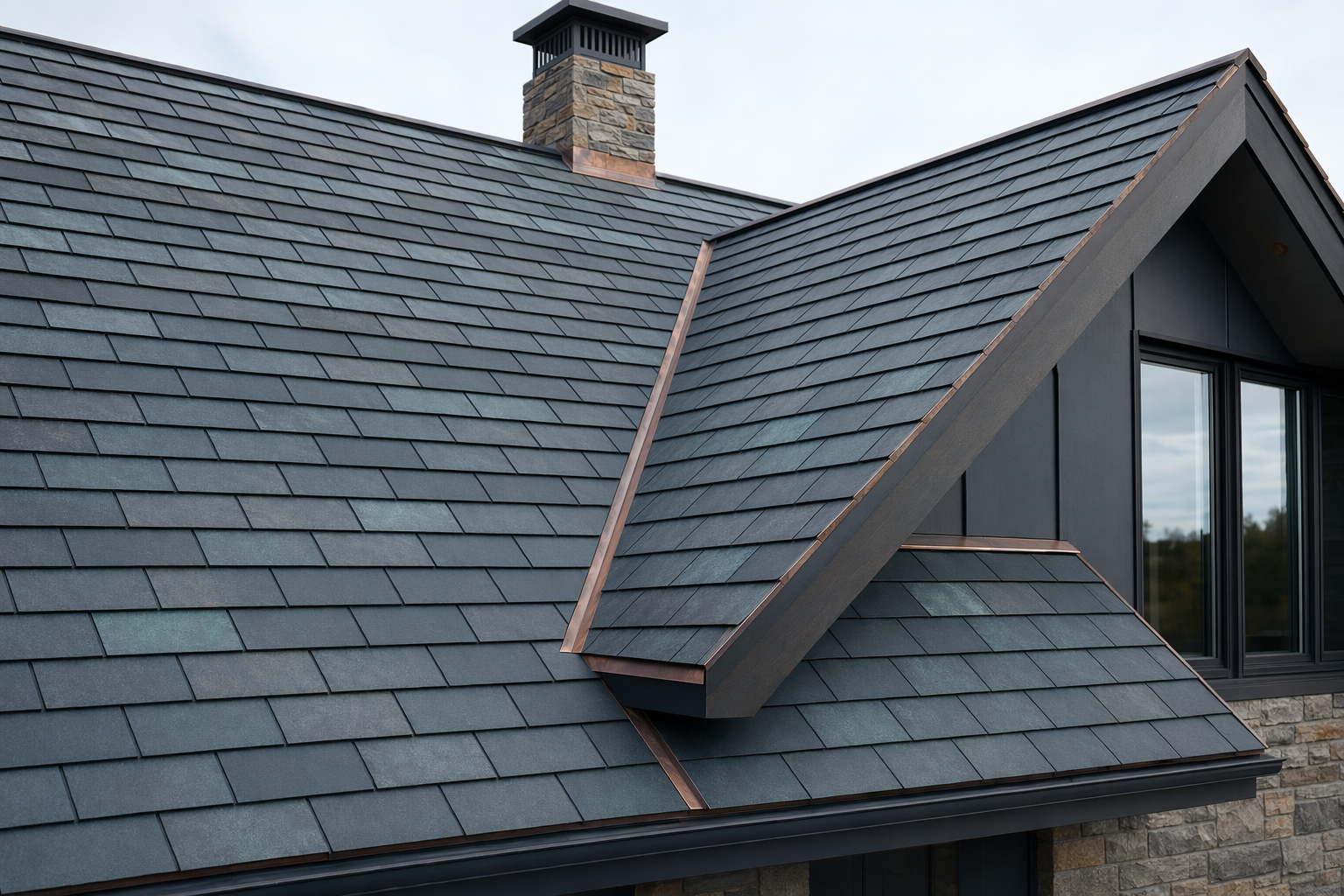
What metal shingles and metal tiles are
Metal shingles and metal tiles are metal roofing panels made to look like other roofs. Some mimic architectural shingles. Others copy slate, wood shake, or clay tile. They are usually made from steel or aluminum and finished with protective coatings and paint systems.
This style is different from exposed-fastener corrugated panels and different from vertical standing seam panels. People often choose it because they want a more traditional house look, not a barn or modern seam look.
A few things matter more than the brochure photos:
- Base metal: steel and aluminum are common
- Thickness: often discussed as gauge for steel
- Coating: paint system and corrosion protection affect long-term performance
- Attachment method: hidden clips or interlocking systems are common, but details vary by product
- Installer skill: valleys, chimneys, skylights, and transitions matter as much as the panel itself
Done right, a metal shingle or tile roof can last about 40-70 years. That is much longer than typical asphalt, which is often about 15-25 years. But metal is not always the right buy. If you may move soon or your budget is tight, asphalt can still be the smarter call. See metal vs asphalt for a plain comparison.
How the process works
SeamRidge is a free matching service. We do not install roofs. We help you understand the options and get connected with licensed, insured, bonded metal roofers in your area. Participating roofers pay a flat fee to take part. You compare estimates, you choose who to hire, and you hold the final payment.
A simple way to use the process:
- Share basic project details. Roof type, approximate size, location, and how to reach you.
- Get matched with local roofers. Ask each one if they regularly install metal shingles or metal tiles, not just metal roofs in general.
- Have them inspect the roof. The real price depends on roof size, pitch, the metal and coating chosen, tear-off, and your area.
- Compare written estimates. Make sure each estimate lists the metal type, gauge, coating, trim, underlayment, ventilation scope if included, cleanup, warranty, and total price.
- Verify before any deposit. Check license and insurance yourself. Confirm permits and code requirements. A good place to start is how to vet a metal roofer.
If you want to start comparing, use Get matched.
Typical cost range
For most homes, metal shingles or metal tiles typically run about $9-$14 per square foot installed. That is an estimate, not a quote or guarantee. The real price depends on roof size, pitch, the metal and coating chosen, tear-off, and your area.
That usually puts metal shingles above asphalt and often below or near some standing seam projects, depending on details. For context:
- Asphalt shingles: roughly $4-$8/sq ft installed
- Corrugated/ribbed metal: roughly $5-$9/sq ft installed
- Metal shingles/tiles: roughly $9-$14/sq ft installed
- Standing seam metal: roughly $10-$18/sq ft installed
Why the spread? Because one roof can be simple and walkable, while another has steep pitch, many valleys, old layers to tear off, chimney flashing, skylights, and complicated trim. Those details change labor a lot.
Cost can also move based on:
- Steel vs aluminum
- Gauge or panel thickness
- Paint/coating quality
- Premium trim and accessories
- New decking repairs if damage is found
- Permit requirements and disposal costs
If a price looks much lower than the others, slow down. Ask what is missing. Sometimes the low number leaves out tear-off, underlayment upgrades, trim, permit handling, or warranty details. For a broader breakdown, visit roofing costs.
Lifespan, maintenance, and where metal makes sense
The big reason people choose this roof is simple: long life. A properly installed metal shingle or tile roof commonly lasts around 40-70 years. Asphalt usually comes in at about 15-25 years.
That does not mean metal is magic. It still needs correct flashing, correct fastening, good ventilation details where required, and occasional inspection after major weather. The coating system matters too. A long-lived base metal can still look rough early if the finish is poor or the installer scratches and mishandles the panels.
Metal shingles often make sense when:
- You plan to stay in the home a long time
- You want lower replacement frequency
- You like the look of shingles, slate, shake, or tile more than vertical metal panels
- You want a lighter alternative to some traditional tile products
Asphalt may be the smarter call when:
- You need the lowest up-front cost
- You may sell in a few years
- The roof is temporary while you handle other major repairs
That is not anti-metal. It is just honest. Paying more up front only makes sense if the longer life, look, and maintenance profile fit your plans. You can read more at metal roof lifespan.
Pros and cons homeowners should weigh
No roof type wins on everything. Here is the straight version.
Pros
- Longer service life than asphalt in many cases
- Traditional appearance with metal durability
- Often available in styles that resemble shake, slate, shingle, or tile
- Can be a good fit where homeowners want metal without the standing seam look
- Usually lighter than concrete or clay tile systems
Cons
- Higher up-front cost than asphalt
- Product lines and accessories vary a lot, so apples-to-apples comparison takes work
- Installer skill matters a lot on flashings and complex roof areas
- Some styles may be less common in your area, which can limit contractor options
- Repairs and matching older panels or finishes can be harder than with common asphalt shingles
A practical note: do not buy only on appearance. Two roofs can look nearly the same from the street and be very different in metal thickness, coating quality, trim package, and warranty terms.
What to ask before you sign
Bring these questions to every estimate meeting. Short questions. Clear answers.
- What exact product are you pricing? Brand line, profile, and whether it is steel or aluminum
- What thickness is it? Ask for the gauge or equivalent product spec in writing
- What coating and paint system does it use? Ask how that affects fading, chalking, and corrosion resistance
- Is tear-off included? If not, what assumptions is the estimate making?
- What underlayment is included? Get the type listed in writing
- What trim and flashing work is included? Valleys, chimneys, skylights, pipe boots, edges, and transitions
- Will any decking repairs be extra? If yes, what is the unit price or process for approval?
- Who pulls permits? Make sure local permits and code are followed. See metal roof permits.
- What warranties apply? Separate the manufacturer material warranty from the installer's workmanship warranty
- How do you protect landscaping and clean up? Nails and metal scraps matter
- What deposit is required, and when is final payment due? Final payment should come after the agreed scope is complete
Most important: get the metal type, gauge, coating, warranty, scope, and price in writing before any deposit.
How to vet a metal shingle roofer
Not every roofer who says "metal" installs metal shingles or tiles well. This is a detail-heavy roof. Vet the company, not just the sales pitch.
Use this checklist:
- Verify license and insurance yourself. Do not rely only on a screenshot or verbal promise. Ask for current proof and confirm it.
- Ask for recent local jobs with the same product style. You want metal shingles or tiles, not just any metal roof.
- Look at detail work. Ask how they handle valleys, sidewalls, chimneys, skylights, and ridge details.
- Read the written estimate closely. If one estimate is vague, that is a problem.
- Ask who is doing the work. Company crew, subcontractors, or both.
- Check permit and code process. A professional roofer should be clear about this.
- Be careful with pressure. If someone pushes for a same-day deposit without clear paperwork, walk away.
If storm damage may be involved, keep expectations realistic. No one can promise an insurance outcome. Work with your own insurer and a licensed roofer and review the scope carefully. SeamRidge does not handle claims or give insurance advice.
When you are ready to compare local companies, start with our free matching service.
In plain English
Metal shingles and tiles can last much longer than asphalt, but they cost more up front. Compare written estimates from licensed, insured, bonded roofers, verify the details yourself, and choose the roof that fits your budget, how long you plan to stay, and the look you want.