How to vet a metal roofer
A metal roof can last a long time, but only if the installer knows what they are doing. This guide shows you how to check a roofer carefully, compare estimates, and avoid expensive mistakes.
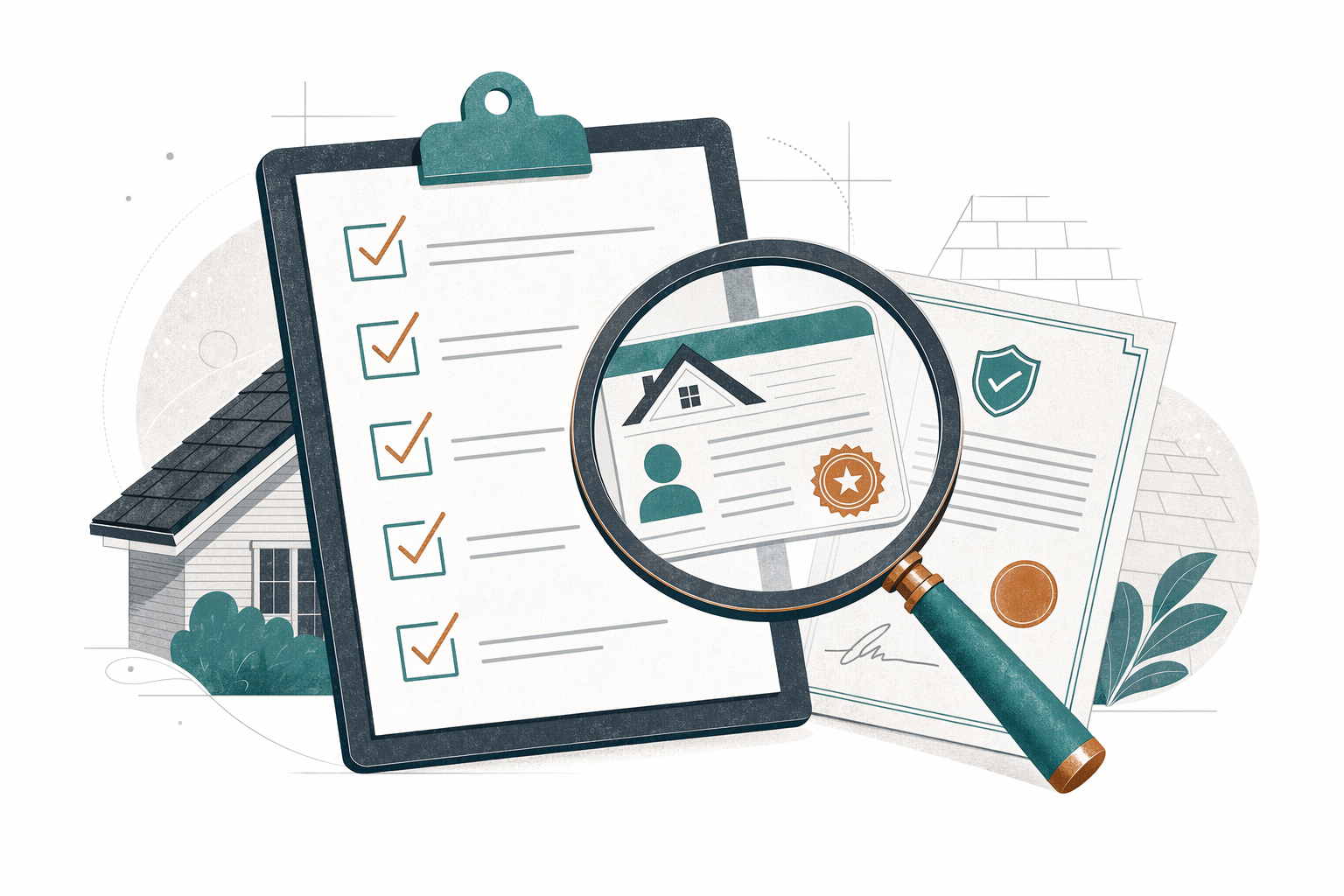
Why vetting matters more with metal
Metal roofing is not just “another roof.” The panels, trim, fasteners, underlayment, ventilation details, and flashing work all need to fit together the right way. A crew that mainly does asphalt may still be a good roofer, but that does not automatically mean they are strong at metal.
Bad metal work can lead to leaks around valleys, chimneys, skylights, pipe boots, and fasteners. It can also cause oil canning, loose panels, noisy movement, early rust, or warranty trouble later. Those problems are frustrating because metal usually costs more up front than asphalt.
That is why you want a roofer with real metal experience on the specific system you want. A standing seam roof is different from exposed-fastener corrugated panels. Metal shingles are different again. If you are still comparing options, see metal vs asphalt to understand when metal makes sense and when asphalt may be the smarter call.
SeamRidge is a free matching service. We help homeowners connect with licensed, insured, bonded metal roofers. You compare estimates, ask questions, and decide who to hire.
The first checks: license, insurance, bond, and local rules
Start with the basics before you spend time reviewing colors, panel profiles, or warranties.
- Verify the contractor license yourself. Ask for the full business name and license number. Then check it through your state or local licensing system.
- Ask for proof of insurance. You want current general liability coverage and workers' compensation where required. Read the certificate dates.
- Confirm they are bonded if your state or local rules require it.
- Ask who pulls the permit. In most places, the contractor should handle permits for the job. If they tell you to pull it yourself, ask why.
- Check code knowledge. A good roofer should be able to explain local requirements for underlayment, fastener schedule, ice-and-water protection where needed, and any wind or fire rules.
Do not skip this step because someone was “recommended by a friend.” Good referrals help, but paperwork matters. If a roofer hesitates when you ask for license and insurance documents, treat that as a warning sign.
If you want a simple checklist for permits and code questions, read metal roof permits. Always follow local permit and building-code rules.
Ask about metal-specific experience, not just roofing experience
A solid vetting conversation gets specific fast. You are not trying to be difficult. You are trying to learn whether this crew really installs the metal system you want.
Ask questions like these:
- How many metal roof jobs did you complete in the last 12 months?
- What share of your work is metal versus asphalt?
- Do you install standing seam, metal shingle, or corrugated/ribbed metal most often?
- For my roof shape, what flashing details matter most around chimneys, skylights, valleys, walls, and vents?
- What panel gauge do you recommend, and why?
- What coating or finish are you proposing?
- Will you use exposed fasteners or concealed fasteners, and what are the tradeoffs?
- Who is the manufacturer, and what installation requirements apply to keep the warranty valid?
Look for clear answers in plain English. A trustworthy roofer should be able to explain the system without hiding behind jargon.
Also ask for recent local metal jobs you can drive by or photos of. If possible, ask for two references from homeowners with similar roofs. When you talk to those homeowners, ask simple questions:
- Did the crew start and finish close to schedule?
- Was the job site kept reasonably clean?
- Did the final price stay close to the written estimate?
- Did any leaks or callbacks happen after installation?
- Would you hire them again?
One more tip: ask who will actually be on your roof. Some companies sell the job and then hand it off to a subcontracted crew you never met. That is not always bad, but you should know in advance who is doing the work and who supervises quality.
What must be in the written estimate
Never rely on a handshake or a short one-page price with no details. Get the scope in writing before any deposit.
A useful estimate should spell out:
- Metal type and profile: standing seam, metal shingle, or corrugated/ribbed
- Gauge or thickness of the metal
- Coating/finish and color
- Underlayment type
- Trim and flashing scope for valleys, edges, walls, skylights, chimneys, and penetrations
- Tear-off or overlay plan
- Deck repair terms if rotten wood is found
- Fastener type and whether fasteners are exposed or concealed
- Ventilation work if included
- Manufacturer warranty and workmanship warranty
- Permit responsibility
- Cleanup and debris removal
- Payment schedule
Price matters, but details matter just as much. Metal roof prices vary by system and area. Typical installed ranges are about $5-$9 per sq ft for corrugated/ribbed metal, $9-$14 per sq ft for metal shingles, and $10-$18 per sq ft for standing seam. Asphalt is often around $4-$8 per sq ft. Those are typical estimates, not quotes. Real pricing depends on roof size, pitch, the metal and coating chosen, tear-off, and your area.
If one estimate is much lower, ask what is different. Lower gauge? Less flashing work? No tear-off? Shorter workmanship warranty? Missing permit cost? Sometimes the cheapest number becomes the most expensive problem.
Before you sign, make sure the roofer puts the metal type, gauge, coating, warranty, scope, and total price in writing. Hold final payment until the agreed work is complete.
Common mistakes homeowners make
These are the mistakes that burn people most often:
- Choosing on price alone. A lower number can hide thinner metal, weaker coatings, missing trim, or poor flashing detail.
- Assuming every roofer is equally good at metal. Many are not.
- Not verifying license and insurance themselves. Do not just take a verbal yes.
- Ignoring the warranty fine print. Manufacturer warranties and workmanship warranties are different.
- Paying too much up front. A deposit may be normal, but keep the payment schedule tied to real progress.
- Accepting vague scope language. “New metal roof installed” is not enough.
- Skipping permits. This can create trouble when selling the home or dealing with inspections.
- Believing big promises after a storm. No roofer can guarantee an insurance outcome. Work with your own insurer and a licensed roofer, and review the process carefully.
Be honest with yourself about budget and time horizon too. Metal usually costs more up front than asphalt, though metal often lasts about 40-70 years versus roughly 15-25 years for asphalt. If you plan to move soon or your budget is tight, asphalt may be the smarter choice. If you expect to stay longer and want durability, metal may be worth the premium. For lifespan basics, see metal roof lifespan.
A simple next step that keeps you in control
If you are ready to talk with contractors, keep the process simple:
- Decide which metal systems you want priced.
- Get at least 2-3 written estimates.
- Compare the scope line by line, not just the total.
- Verify license, insurance, and bond yourself.
- Check references and recent local jobs.
- Read the warranty and payment terms before signing.
SeamRidge can help you start. Use get matched to connect, at no cost, with licensed, insured, bonded metal roofers in your area. Participating roofers pay a flat fee to be included. You compare estimates. You choose who to hire. You hold the final payment.
In plain English
Do not hire a metal roofer until you verify the license and insurance yourself, check recent metal jobs, and get the metal type, gauge, coating, warranty, scope, permit plan, and price in writing. Compare 2 to 3 estimates, then choose the contractor you trust most, not just the cheapest one.