What a metal roof really costs
Metal roofing usually costs more up front than asphalt. The tradeoff is lifespan: metal often lasts about 40-70 years, while asphalt is often around 15-25 years.
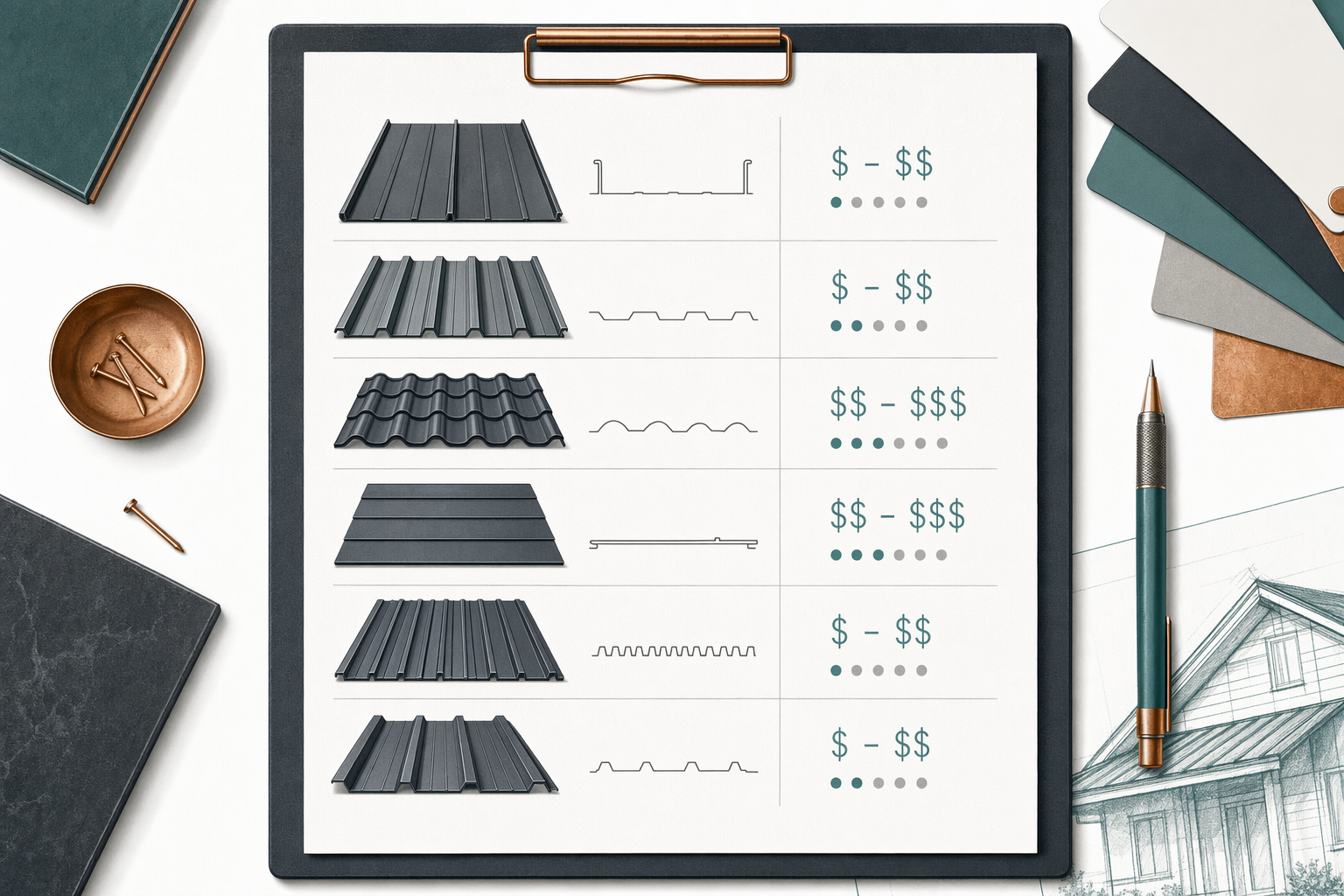
| Metal roof | Installed cost |
|---|---|
| Corrugated | $5-$9 / sq ft |
| Metal shingle | $9-$14 / sq ft |
| Standing seam | $10-$18 / sq ft |
Start with the honest baseline
A metal roof is not the cheapest roof to buy. In many US markets, installed metal roofing commonly falls into these rough ranges:
- Corrugated or ribbed panels: about $5-$9 per sq ft installed
- Metal shingles: about $9-$14 per sq ft installed
- Standing seam: about $10-$18 per sq ft installed
- Asphalt shingles for comparison: about $4-$8 per sq ft installed
Those are typical estimates, not quotes. Your real price depends on roof size, roof pitch, the metal and coating you choose, whether old roofing has to be torn off, and labor rates in your area. If you want a broader breakdown by system, see costs.
Also, metal is not always the right answer. If you may move soon, or your budget is tight right now, asphalt can be the smarter call. If you plan to stay put and want a longer-life roof, metal may be worth the premium.
What pushes the price up or down
The biggest price swings usually come from a few practical things:
1. Roof size
More square footage means more panels, trim, fasteners, underlayment, and labor. Bigger roofs cost more, even when the price per square foot stays similar.
2. Roof pitch and complexity
A simple walkable roof is usually cheaper than a steep roof with lots of valleys, dormers, skylights, chimneys, and intersecting lines. Complex roofs create more cutting, more waste, and more labor time.
3. Metal type
Corrugated/ribbed is usually the budget-friendly end. Standing seam often costs more because the panels, details, and installation are more exact. Metal shingles can also run higher depending on profile and brand.
4. Gauge and coating
Thicker metal and better paint/coating systems can raise the price. That does not mean you should just buy the most expensive option. It means you should know exactly what gauge and coating are included before you compare one estimate to another.
5. Tear-off and deck repairs
Removing old shingles, hauling debris, and replacing damaged roof decking can add a lot. Some homes need very little repair. Some need more than expected once the old roof comes off.
6. Your location
Labor, permit costs, disposal fees, and code requirements vary by city and state.
A low number on paper can hide missing items. That is why line-by-line comparison matters.
Metal vs asphalt over the life of a home
This is where people get tripped up. Cheaper today and cheaper over time are not always the same thing.
Metal usually costs more up front, but it often lasts about 40-70 years. Asphalt usually costs less up front, but often lasts about 15-25 years. See metal vs asphalt if you want the side-by-side basics.
That does not mean metal is automatically the better value for every homeowner.
- If you expect to stay in the home a long time, the longer service life may matter a lot.
- If you want the lowest initial cost, asphalt may make more sense.
- If your roof shape is simple and you choose a lower-cost metal profile, the gap may be smaller.
- If your budget is stretched, paying more now can create stress even if the roof may last longer.
A good question is not just, "What is the cheapest roof?" It is, "What roof fits my budget, how long I plan to stay, and how much future replacement risk I want?"
You should also ask each roofer what kind of maintenance and warranty applies to the exact system they are proposing. Get that in writing.
Labor, tear-off, and the hidden items homeowners miss
Many homeowners focus on panel price and miss the work around it. Labor and prep can be a big part of the total.
Watch for these items in the scope:
- Tear-off of old roofing
- Disposal and dump fees
- Underlayment type
- Flashing at valleys, walls, chimneys, and penetrations
- Ridge, hip, rake, and eave trim
- Pipe boots and vent details
- Decking replacement if damaged
- Permit costs
- Cleanup with magnetic nail sweep
If an estimate is far below the others, ask what is missing. It may not include tear-off. It may assume no deck repair. It may use a different metal gauge or coating. It may leave permit fees to you.
And remember: local permit and code rules matter. Follow local requirements and verify them with your roofer and city or county. Our permit guide can help you know what to ask.
A plain note on financing
Some homeowners pay cash. Others use savings, a home-improvement loan, or another financing method offered through a lender or contractor. SeamRidge does not give financial advice, and we do not tell you what loan is right for you.
What we can say is simple:
- Look at the total cost, not just the monthly payment.
- Ask whether there are fees, prepayment penalties, or rate changes.
- Make sure the full roofing scope is written down before you agree to finance anything.
- Do not feel rushed because of a "today only" payment pitch.
If budget is the main issue, it is okay to say so. Sometimes a lower-cost metal profile, a phased repair plan, or even asphalt is the more realistic choice. Honest planning beats regret.
How to compare estimates line by line
When you get estimates, slow down and compare the details. You compare estimates. You choose who to hire. You hold the final payment.
Use this checklist:
1. Verify the roofer
Hire only roofers who are licensed, insured, and bonded where required. Verify the license and insurance yourself. Our guide on how to vet a metal roofer shows what to check.
2. Match the system details
Compare the same roof type against the same roof type. Standing seam vs standing seam. Metal shingle vs metal shingle. Make sure the estimate lists the metal type, gauge, coating, panel/profile, trim, and underlayment.
3. Check the scope
Is tear-off included? How many layers? Is decking replacement included, excluded, or billed only if needed? Are permits included? What about disposal and cleanup?
4. Read the warranty language
There may be a manufacturer warranty on materials and a separate workmanship warranty from the installer. Get both in writing.
5. Review payment terms
Know the deposit amount, progress payments if any, and what must be finished before final payment.
6. Do not compare price alone
The cheapest estimate can be the most expensive mistake if key details are missing.
A good estimate should be clear enough that you can explain it back to someone else in plain English.
In plain English
Metal roofs usually cost more up front than asphalt, but they often last much longer. Get a few written estimates from licensed, insured, bonded roofers, compare the metal type, gauge, coating, tear-off, warranty, and permit details line by line, and choose the option that fits your budget and how long you plan to stay.