How long a metal roof lasts
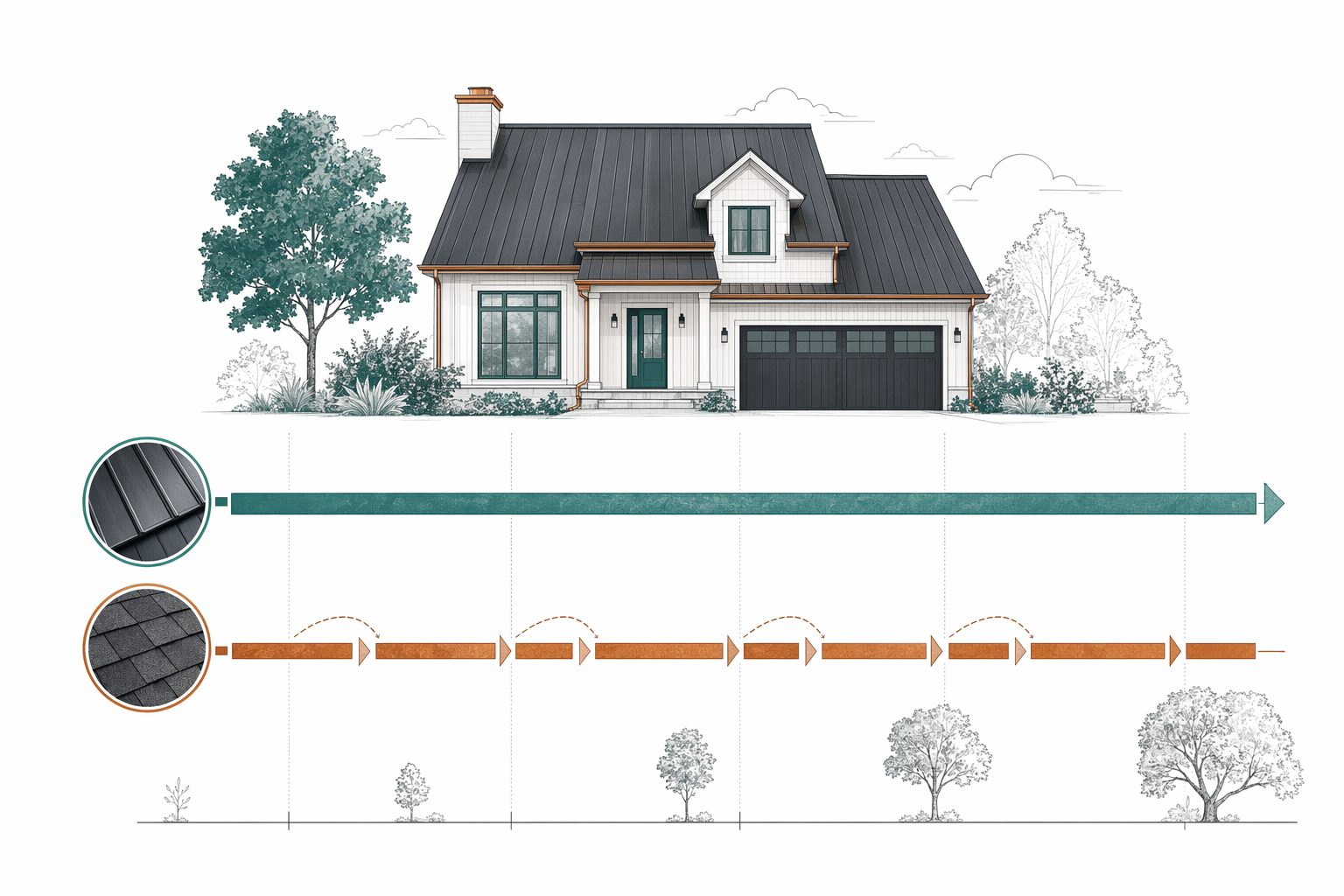
A metal roof usually lasts **about 40 to 70 years**. That is much longer than asphalt, which is often **about 15 to 25 years**, but the real lifespan depends on the metal, coating, workmanship, weather, and upkeep.
The short answer: metal lasts longer, but it costs more up front
If you want the honest version, here it is: metal roofing usually lasts much longer than asphalt, but you pay more at the start.
Typical installed cost ranges for many homes are:
- Corrugated or ribbed metal: about $5-$9 per sq ft
- Metal shingle: about $9-$14 per sq ft
- Standing seam: about $10-$18 per sq ft
- Asphalt shingles: about $4-$8 per sq ft
Those are typical ranges, not quotes or guarantees. Real price depends on roof size, pitch, the metal and coating chosen, tear-off, and your area.
For lifespan, a well-installed metal roof often lands in the 40-70 year range. Asphalt often lands in the 15-25 year range. That does not mean every metal roof will reach 70 years. A cheap panel, thin metal, poor fasteners, bad flashing, or sloppy install can cut life short.
If you may move soon or your budget is very tight, asphalt can still be the smarter choice. If you plan to stay longer and want fewer replacements, metal may make more sense. You can compare the tradeoffs here: metal vs asphalt.
What makes one metal roof last 40 years and another 70
Not all metal roofs age the same way. Lifespan is not just about “metal” in general. It comes down to the full system.
The biggest factors are:
1. Metal type and profile
A concealed-fastener system like standing seam often lasts longer than an exposed-fastener panel because there are fewer exposed screw points that can loosen or age in the weather.
2. Gauge and panel quality
Thicker metal is usually tougher. Thin panels can be more vulnerable to oil-canning, denting, and wear over time. Ask what gauge you are getting, and get it in writing.
3. Paint finish and coating
The finish matters almost as much as the metal itself. Better coatings can hold color longer and protect against corrosion. In coastal or harsh climates, coating choice matters even more.
4. Installation quality
Good details at valleys, chimneys, skylights, eaves, and penetrations are a big deal. Many early failures start at flashing, trim, sealant joints, or poorly planned panel layout, not the field of the roof itself.
5. Climate and location
Salt air, heavy snow, hail, wind-driven rain, strong sun, and frequent freeze-thaw cycles all affect lifespan. A roof in Arizona may age differently from one in Florida or Minnesota.
6. Ventilation and roof design
Poor attic ventilation can trap heat and moisture. Complex roofs with many cuts and penetrations usually create more places for leaks or workmanship mistakes.
7. Maintenance
Metal is low maintenance, not no maintenance. A quick check after storms, keeping debris out of valleys, and catching loose trim or failed sealant early can add years.
For a broader overview, see metal roof lifespan.
How different metal roof styles tend to age
A homeowner should know that the roof style affects both upkeep and life expectancy.
- Standing seam
Often the longest-lasting common residential option. Panels lock together and usually hide the fasteners. That can reduce water entry points and maintenance trouble over time. It also tends to cost the most up front.
- Metal shingles
These can give a more traditional look and can last a long time when the product is good and the installer knows the system well. Life varies more by brand design and installation details.
- Corrugated or ribbed panels
These are often the lower-cost metal option. They can still perform well, but exposed fasteners may need more attention over the years because washers and screws can age, back out, or need replacement.
None of this means one system is always right. A simpler roof in a mild climate may do just fine with a lower-cost profile. A long-term owner in a severe-weather area may prefer the extra cost of a premium system. Learn the basics of corrugated/ribbed and compare the system to your goals, not just the sales pitch.
What you should do before you sign anything
If you are trying to buy a roof that actually lasts, focus on the parts most homeowners never see on the pretty sample board.
- Hire licensed, insured, bonded roofers and verify the license and insurance yourself
- Ask whether they install this exact metal system regularly, not just “metal roofs” in general
- Get the metal type, panel profile, gauge, coating, underlayment, flashing details, warranty, scope, and total price in writing before any deposit
- Ask how they handle pipe boots, skylights, valleys, chimneys, transitions, and trim details
- Ask whether old roofing will be torn off or roofed over, if local code allows it
- Confirm who pulls permits and what inspections are required
- Follow local permits and building code. If you need help understanding the process, read metal roof permits
- Hold final payment until the agreed work is complete
A free match can save time, but you compare estimates, you choose who to hire, and you control final payment. If you want to talk with roofers in your area, you can get matched at no cost to you. Participating roofers pay a flat fee to be included.
Common mistakes that shorten a metal roof’s life
Most roof regret starts with a rushed decision. These are the mistakes that burn homeowners most often:
1. Buying on price alone
The cheapest bid may leave out better trim, thicker metal, quality underlayment, or needed tear-off work.
2. Not checking exposed-fastener details
If you choose a system with exposed screws, ask what screws and washers are used and what long-term maintenance to expect.
3. Ignoring the coating
Homeowners ask about color but forget to ask about finish quality and corrosion protection.
4. Assuming “lifetime” means forever with no upkeep
Warranties have terms, limits, and exclusions. Read them. Some cover finish fade or chalking differently than leaks or labor.
5. Hiring a general roofer with little metal experience
Metal installation is detail-heavy. A contractor who is strong with asphalt may still do poor work on metal.
6. Skipping permit and code questions
A roof that is not installed to local code can become a resale problem later.
7. Overspending when your timeline does not support it
If you plan to sell soon, a premium metal roof may not be the best use of cash. Sometimes asphalt is the practical move.
A metal roof can be a great long-term upgrade. It is not magic. The long life comes from good material plus good installation plus basic upkeep.
Next step: compare bids with a long-life mindset
When you review estimates, do not just ask, “What is the price?” Ask, “What am I getting for the next 40-70 years?”
Use this simple checklist:
- What exact metal system is it?
- What gauge is it?
- What coating or finish is included?
- What underlayment and flashing details are included?
- Is tear-off included?
- What permits are included?
- What warranty is included, and what does it not cover?
- Who will actually install it?
Then compare that to how long you expect to stay in the home and what your budget can handle today. That is the honest way to decide.
If you want help finding licensed, insured, bonded roofers to compare, SeamRidge can help you get matched for free. Then you review the options, ask questions, verify credentials, and decide who earns the job.
In plain English
A metal roof often lasts 40-70 years, but only if the material, coating, and installation are solid. Get several written estimates, verify the roofer is licensed, insured, and bonded, and compare the exact metal type, gauge, warranty, and full scope before you pay a deposit.