Metal Roofs in Hail and Storm Country
If you live where hail, high wind, and hard rain are normal, a metal roof can be worth a serious look. It usually costs more up front than asphalt, but it may last much longer and can be a strong fit for storm-prone homes when installed by a licensed, insured, bonded roofer.
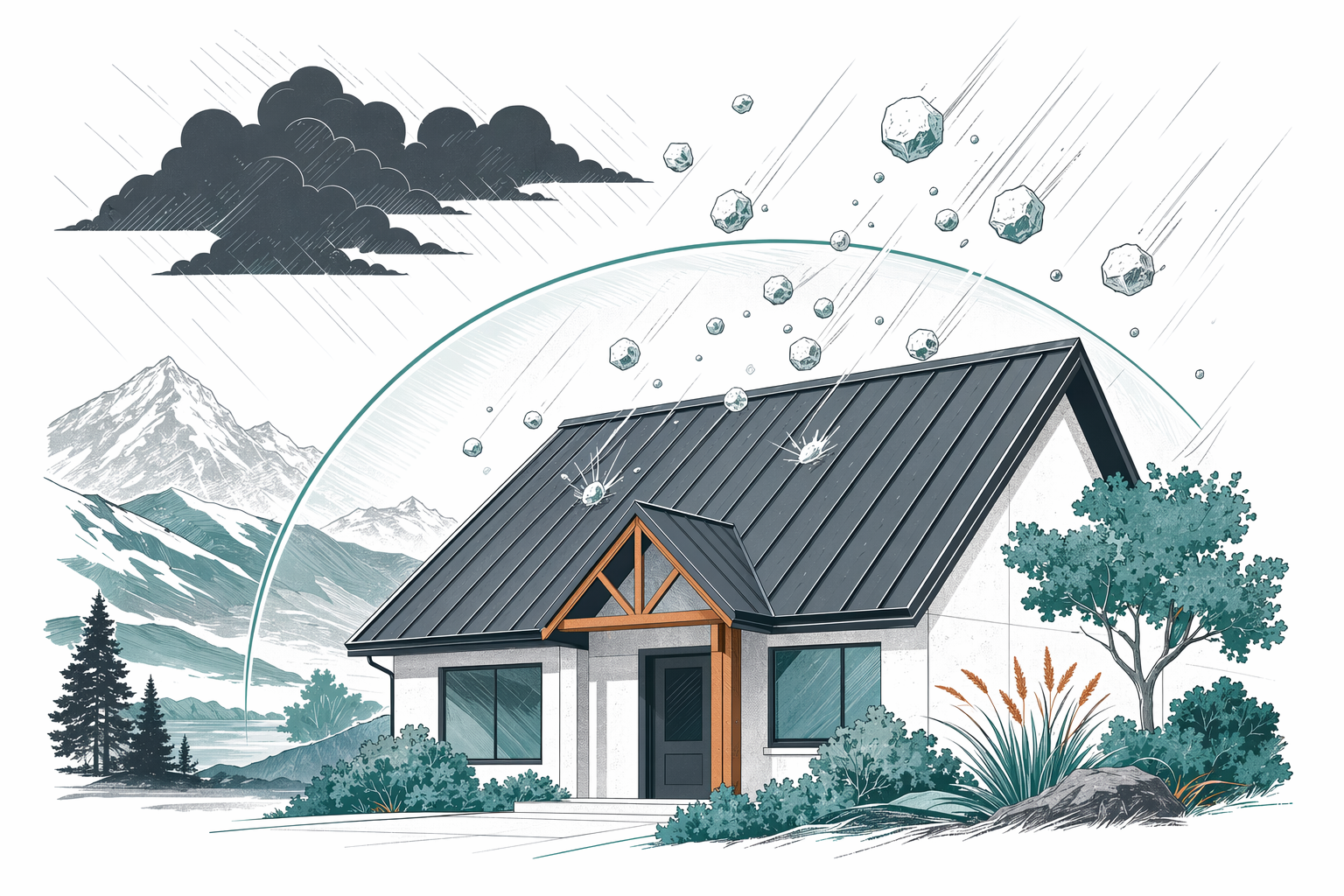
Why some homeowners in storm country choose metal
Storm areas are rough on roofs. Hail can bruise shingles. Wind can lift tabs. Heavy rain finds weak flashing fast.
A metal roof is not damage-proof, and nobody honest should tell you it is. Hail can still dent some metal panels. Big enough storms can damage almost any roof. But metal is popular in storm country for a few simple reasons:
- It can have a long service life, often around 40-70 years.
- Many systems shed rain and snow well.
- Properly installed panels can perform well in high wind.
- It may need fewer full replacements over time than asphalt, which typically lasts about 15-25 years.
That does not mean metal is always the best buy. If you expect to move soon, or your budget is tight right now, asphalt may be the smarter call. You can compare the tradeoffs here: metal vs asphalt.
The main point is simple: in hail and storm country, you want a roof system that fits your home, your local weather, and your budget. Not a sales pitch.
What to look at before you choose a metal roof
Not all metal roofs are the same. In storm areas, details matter.
Start with the roof system itself
- Profile: Standing seam, metal shingle, and corrugated/ribbed panels all behave a little differently. Standing seam is often chosen for a cleaner look and concealed fasteners. Corrugated or ribbed panels can cost less. Metal shingles can better match traditional home styles.
- Gauge and thickness: Thicker metal can matter for durability and dent resistance, but it is not the only factor.
- Metal type: Steel and aluminum are common. What makes sense depends on your area, home style, and budget.
- Coating and finish: The paint system and coating affect long-term appearance, corrosion resistance, and warranty terms.
Then look at the real-world install details
- Underlayment quality
- Flashing around chimneys, valleys, skylights, and walls
- Venting details
- Fastener placement and panel layout
- Whether tear-off is included
- Whether local code requires special underlayment, ice barrier, or edge metal
If you are comparing styles, these pages can help: standing seam and corrugated/ribbed metal roofing.
In storm country, the installer matters as much as the material. Always hire licensed, insured, bonded roofers. Then verify the license and insurance yourself. Before any deposit, get the metal type, gauge, coating, warranty, scope, and price in writing. Follow local permit and building-code rules.
Honest cost ranges in storm-prone areas
Here is the plain truth: metal usually costs more up front than asphalt.
Typical installed price ranges often look like this:
- Corrugated/ribbed metal: about $5-$9 per sq ft
- Metal shingle: about $9-$14 per sq ft
- Standing seam: about $10-$18 per sq ft
- Asphalt shingles: about $4-$8 per sq ft
These are typical ranges, not quotes or guarantees. The real price depends on:
- Roof size
- Roof pitch and complexity
- The metal and coating chosen
- Tear-off and disposal
- Trim, flashing, and penetrations
- Your area and local labor costs
Storm-country homes can land higher in the range if the roof is steep, cut up by valleys and dormers, or needs code-related upgrades. A low-slope porch roof, detached garage, or simple ranch home may be more straightforward.
What trips people up is comparing only the total price. Look at the scope. One estimate may include full tear-off, upgraded underlayment, new flashing, and permit handling. Another may not. A lower number is not automatically the better deal.
And again, metal is not always the smartest financial move. If you need the lowest immediate cost and do not expect to stay in the home long, asphalt may make more sense. If you plan to stay put and want a roof that may last decades longer, paying more for metal can be reasonable.
If you want a broader breakdown of pricing, start with metal roof costs.
Storm damage and insurance: the honest process
After a hailstorm or wind event, it is easy to get pushed into fast decisions. Slow down.
No one can honestly promise your insurance company will pay for a roof. Claim decisions depend on your policy, your insurer's inspection, the documented condition of the roof, and the facts of the loss.
A neutral, practical process looks like this:
- Document what you can safely see. Note the date of the storm. Take photos from the ground if possible. Do not climb a dangerous roof.
- Contact your insurer to ask about the claim process under your policy.
- Have a licensed roofer inspect the roof and explain what they see in plain language.
- Compare findings with the insurer's process and any adjuster inspection.
- Get the scope in writing before agreeing to work.
If your roof has cosmetic dents but no functional leaking or system failure, that can matter. If flashing, seams, fasteners, or penetrations are affected, that can matter too. The point is to get a clear, written assessment from a licensed roofer and communicate directly with your own insurer.
SeamRidge does not handle claims and does not promise any insurance outcome. We are a free matching service that helps you connect with local roofers so you can compare estimates and choose who to hire.
A smart next step if you live in hail country
If you are seriously considering metal, keep your process simple.
- Get matched with a few licensed, insured, bonded local roofers.
- Ask each one what metal system they recommend for your roof and why.
- Ask for the metal type, gauge, coating, warranty, scope, permit responsibility, and price in writing.
- Verify license and insurance yourself.
- Do not pay in full up front. You hold the final payment until the agreed work is done.
SeamRidge is free for homeowners. We help homeowners, including new immigrants and non-native English speakers, understand options and connect with local roofers. Participating roofers pay a flat fee to be included. You compare the estimates. You choose who to hire.
If you want to start, use get matched. If you want help checking a contractor first, read how to vet a metal roofer.
In plain English
Metal can be a smart roof in hail and storm country, but it is not magic and it does cost more up front. Get a few written estimates from licensed, insured, bonded roofers, verify their credentials yourself, compare the exact metal system and scope, and work with your own insurer if storm damage may be involved.