Metal roof permits & inspections
A metal roof usually needs permits and inspections, but the exact rules depend on your city, county, HOA, and the kind of work being done. The safe move is simple: ask first, get it in writing, and hire a **licensed, insured, bonded** roofer who will follow local code.
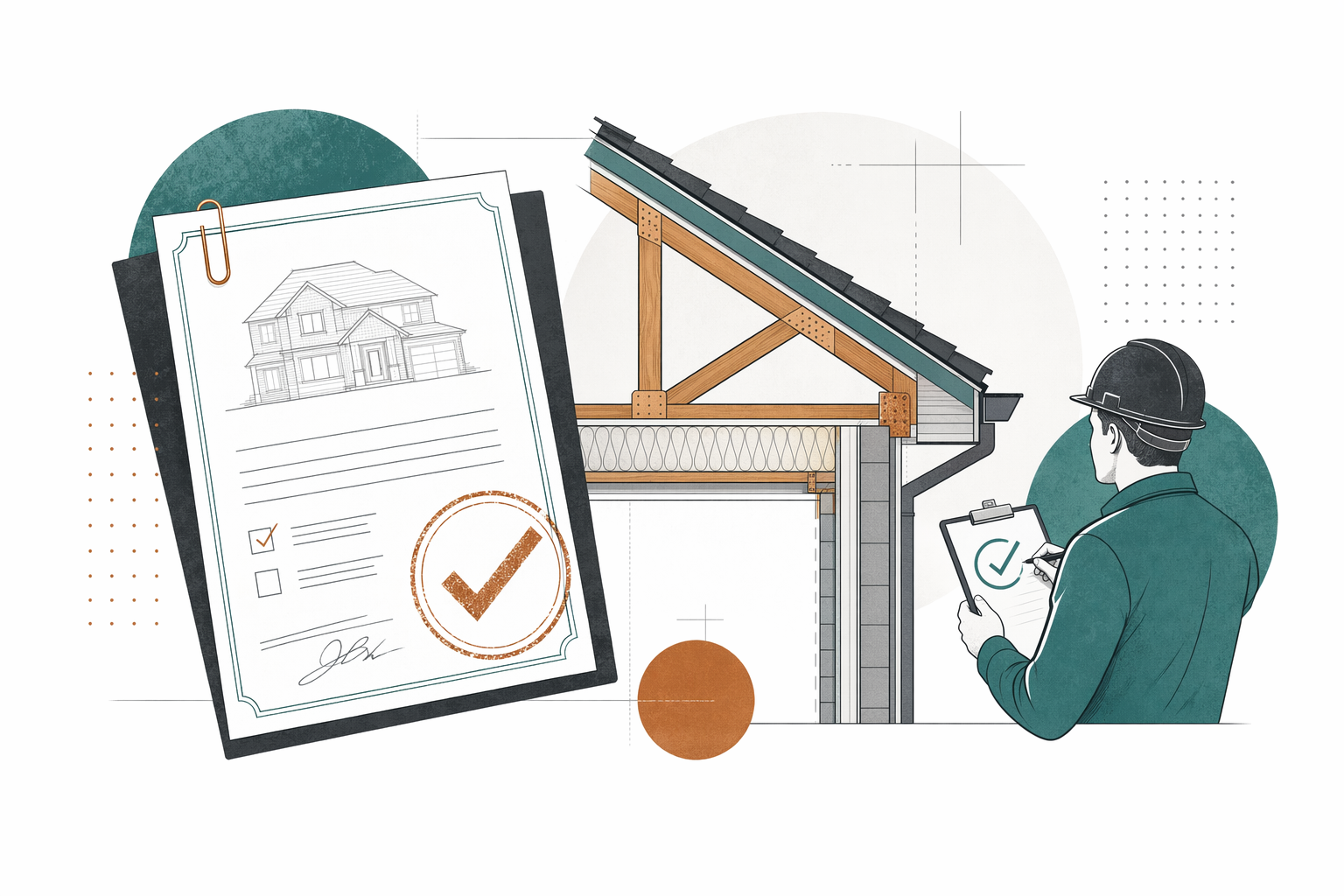
Why permits matter for a metal roof
A permit is the local government's way of checking that roofing work meets code. An inspection is how they verify the job was done the way the permit and code require.
For homeowners, permits are not just paperwork. They can affect:
- Safety for wind, fire, water, and structural load
- Resale if a buyer asks whether the roof was permitted
- Insurance if there is later storm or leak damage and the work was not done to code
- Warranties if the installation does not match manufacturer requirements
Metal roofing often has more details to review than people expect. The inspector may care about the underlayment, fastener pattern, edge metal, flashing, ventilation, deck condition, and whether the product is approved for your wind zone or fire rating.
If you are still comparing roof types, see metal vs asphalt. Metal usually costs more up front than asphalt, but it typically lasts much longer, about 40-70 years versus 15-25 years for asphalt. That does not mean metal is always the right choice. If you may move soon or your budget is tight, asphalt can be the smarter call.
When a permit is usually required
Rules are local, so there is no one national answer. But in many US areas, a permit is usually required when:
- You are replacing the roof, not just doing a tiny repair.
- You are tearing off old roofing.
- You are changing the roof covering type, such as going from asphalt to metal.
- The work may affect decking, flashing, ventilation, skylights, chimneys, or structural elements.
- Your area has stricter rules for wind, wildfire, snow load, or historic districts.
A permit may be handled differently if the contractor is installing metal over one existing layer, if code allows it. Some places allow this in certain situations. Others do not. Local code decides.
Your HOA may also require approval, even if the city does not. HOA approval is separate from permits. One does not replace the other.
If you want help understanding the process before you talk to roofers, read our guide to metal roof permits.
What inspectors usually look for
Homeowners often think an inspection is just a quick look from the driveway. Usually it is more specific than that.
Common inspection points include:
- Permit scope matches the work being done
- Roof deck condition and any damaged sheathing replaced where required
- Underlayment type and installation
- Ice and water protection where local code requires it
- Flashing at valleys, chimneys, walls, vents, and skylights
- Fasteners: right type, spacing, and placement for the metal panel or shingle system
- Edge details like drip edge, rake trim, and closure strips
- Ventilation and attic airflow where required by code or product instructions
- Product approvals for wind uplift, fire rating, and local climate needs
- Manufacturer installation instructions followed so the system can perform as designed
The exact checklist depends on the metal roof type. For example:
- Standing seam systems often get close attention on clip spacing, seam details, and thermal movement.
- Exposed-fastener systems need correct screw placement and washer sealing.
- Metal shingles need proper interlock and flashing details.
A passed inspection is a good sign, but it is not a lifetime guarantee. That is why you should still get the metal type, gauge, coating, warranty, scope, and price in writing before any deposit.
What to do before work starts
This is where many homeowners save themselves a lot of trouble. Use this simple checklist.
- Call your building department. Ask whether your project needs a permit, how many inspections are typical, and whether changing from asphalt to metal changes the rules.
- Ask your HOA in writing. Get any color, profile, or material rules before you sign a contract.
- Hire carefully. Use only licensed, insured, bonded roofers, and verify the license and insurance yourself. Do not just take a business card or website claim at face value.
- Get the scope in writing. Your paperwork should clearly list the metal type, panel or shingle style, gauge, coating or paint finish, underlayment, flashing work, tear-off, deck repairs if needed, permit responsibility, inspections, cleanup, warranty, and payment schedule.
- Ask who pulls the permit. In many places, the roofer should do it. If someone asks you to pull a permit as the homeowner for contractor work, ask your building department if that is appropriate.
- Ask about the inspection timing. Some jobs have a dry-in or in-progress inspection before the roof is fully finished.
- Keep records. Save the permit card, inspection results, contract, product sheets, color name, warranty papers, and final paid invoice.
If you are collecting estimates, get matched with roofers in your area at no cost. SeamRidge is a free matching service. We do not install roofs. You compare estimates, choose who to hire, and hold the final payment.
Common permit and inspection mistakes
These are the mistakes that create delays, extra cost, or problems later when you sell the house.
- Assuming a permit is not needed because it is 'just a roof.' Full replacements often do need one.
- Trusting verbal promises. If the roofer says permits are included, make sure that is written into the contract.
- Not verifying license and insurance. Do this yourself.
- Skipping HOA approval. Even a code-compliant roof can become a problem with the HOA if you ignored their process.
- Changing materials mid-job. A different panel, gauge, or assembly may affect code approval or warranty.
- Covering bad decking without documenting repairs. Rotten sheathing should be addressed as required by code.
- Paying too much up front. Keep control of the project. Final payment should wait until the agreed work is done and you have the documents you were promised.
- Ignoring local climate rules. Coastal wind zones, hail areas, wildfire zones, and snow regions can all change the required roof assembly.
Also be realistic about cost. A metal roof is usually a premium product. Typical installed ranges are roughly:
- Corrugated or ribbed metal: about $5-$9 per sq ft
- Metal shingle: about $9-$14 per sq ft
- Standing seam: about $10-$18 per sq ft
- Asphalt shingles: about $4-$8 per sq ft
Those are typical estimates, not quotes. Your real price depends on roof size, pitch, the metal and coating chosen, tear-off, and your area. You can review more pricing detail on our costs page.
Your next step
If you are serious about a metal roof, do not start with the fanciest panel profile. Start with the rules and the paperwork.
A good next step is:
- Confirm permit and HOA requirements.
- Shortlist roofers who are licensed, insured, bonded.
- Ask each one to explain the proposed system in plain language.
- Compare written estimates line by line.
- Do not release final payment until the job is complete and you have the documents you need.
If you want help finding companies to compare, SeamRidge can match you with roofers at no cost to you. Participating roofers pay a flat fee to be included. You stay in control of the project, and you choose who to hire. Before signing anything, use our checklist to vet a metal roofer.
In plain English
Before you buy a metal roof, call your building department and HOA, then compare written estimates from licensed, insured, bonded roofers. Make sure the permit, inspections, metal type, gauge, coating, warranty, scope, and price are all in writing before any deposit.