Metal roofing materials & coatings
Metal roofs are not all the same. The metal type, gauge, panel style, and coating all affect price, looks, noise, corrosion resistance, and how long the roof may last.
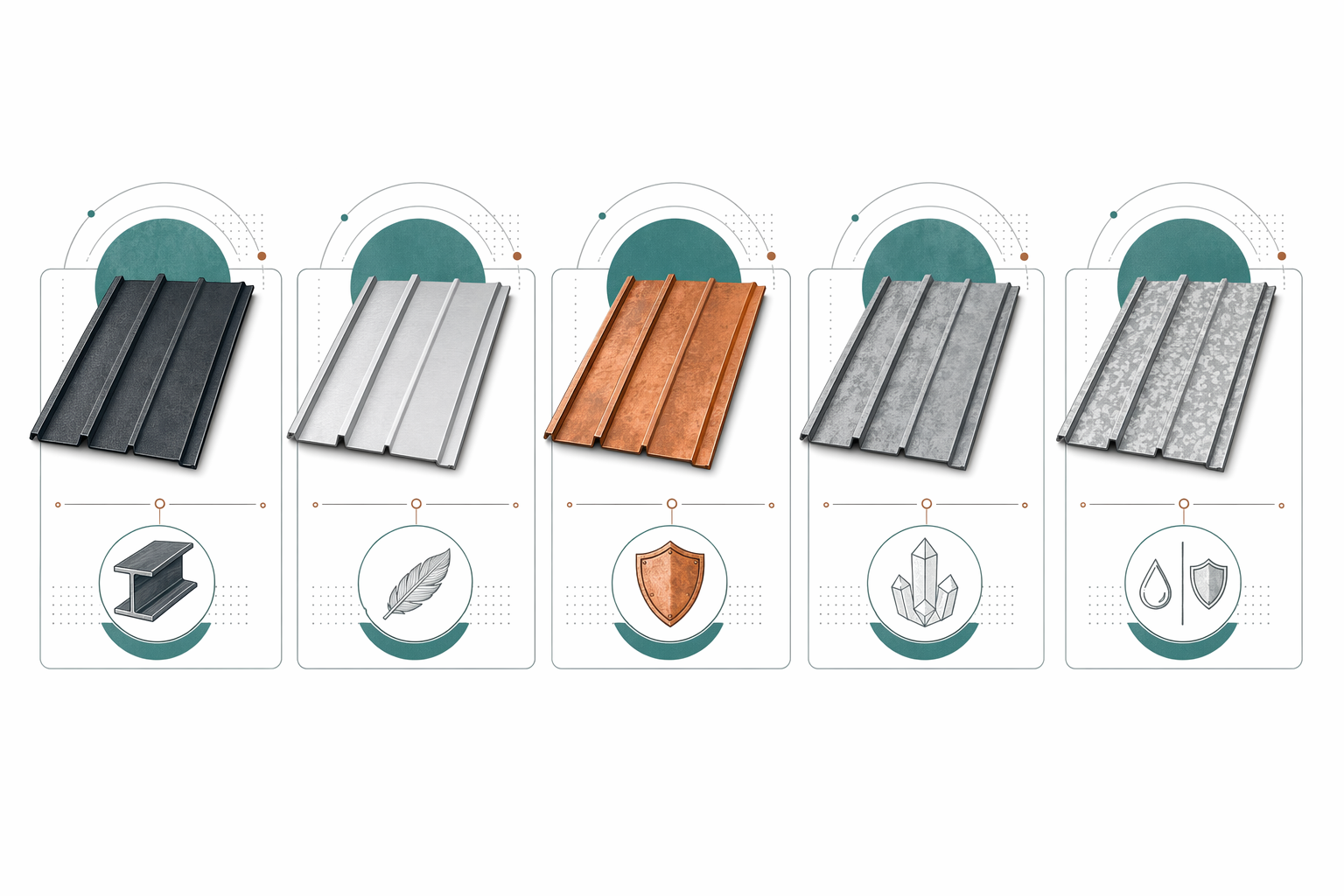
What homeowners are really choosing
When people say "metal roof," they usually mean one of a few systems: corrugated/ribbed panels, metal shingles, or standing seam. Each can work well. The right pick depends on your budget, your climate, and how long you plan to stay in the home.
The main choices are:
- Panel or shingle style: exposed-fastener ribbed panels, stamped metal shingles, or concealed-fastener standing seam
- Base metal: commonly steel, sometimes aluminum, and less often premium metals like copper
- Thickness: often called gauge on steel products
- Finish: paint or protective coating that affects fade, chalking, rust resistance, and warranty terms
A simple truth: metal usually costs more up front than asphalt. Typical installed ranges are about $5-$9 per sq ft for corrugated/ribbed metal, $9-$14 per sq ft for metal shingle, and $10-$18 per sq ft for standing seam. Asphalt is often around $4-$8 per sq ft installed. The real price depends on roof size, pitch, tear-off, trim details, the metal and coating chosen, and your area.
If you want a side-by-side reality check, see metal vs asphalt.
Common metal roofing materials
Not every contractor offers every metal, and not every metal makes sense for every house.
Steel is the most common choice in residential metal roofing. It is usually the best balance of cost, strength, and availability. Most homeowners looking at metal are really comparing different steel systems and finishes.
Aluminum is lighter and naturally resists rust well, which can help in coastal or high-moisture areas. It often costs more than steel.
Copper and other premium metals exist, but they are specialty products. They can look beautiful and last a long time, but they are outside what most homeowners mean when they ask for a metal roof.
Within those metals, the roof style matters a lot:
- Corrugated/ribbed panels: Usually the most budget-friendly metal option. Good for simple roof shapes. Because many systems use exposed fasteners, maintenance details matter.
- Metal shingles: Made to look more like traditional shingles, slate, tile, or shake. Usually more expensive than ribbed panels. Good if curb appeal matters and you want a more familiar look.
- Standing seam: Vertical panels with concealed fasteners. Usually the premium residential choice. Clean look. Often a strong fit for longevity and weather resistance when installed correctly.
If you want a deeper look at styles, compare standing seam and metal shingle.
Coatings and finishes: where a lot of value lives
Many homeowners focus on the metal and forget the finish. That can be a mistake. The coating is a big part of how the roof handles sun, rain, salt, color fading, and surface corrosion over time.
Ask roofers to explain the finish in plain language, not just brand terms.
Important points to get in writing:
- What is the base metal? Steel or aluminum?
- What is the thickness or gauge? Thicker is not always needed everywhere, but you should know what you are paying for.
- What coating or paint system is included? Ask how it is expected to perform in your climate.
- Is the color standard or upgraded? Some colors and finishes cost more.
- What does the warranty actually cover? Fading? Chalking? Rust perforation? Workmanship? For how long?
A coating can matter even more in places with:
- Strong sun and heat
- Salt air near the coast
- Heavy rain or long wet seasons
- Snow and ice
- Trees dropping debris that holds moisture on the roof
Do not assume the most expensive finish is always worth it. If you may move in a few years, a practical mid-range system may make more sense than paying extra for a premium finish you may never fully benefit from.
Typical cost ranges and what changes the price
Here are typical installed ranges, not quotes or guarantees:
- Corrugated/ribbed metal: about $5-$9 per sq ft installed
- Metal shingle: about $9-$14 per sq ft installed
- Standing seam: about $10-$18 per sq ft installed
- Asphalt shingles: about $4-$8 per sq ft installed
Those are broad homeowner ranges. Your real price depends on:
- Roof size and shape
- Roof pitch and how hard it is to work on safely
- Tear-off of old roofing vs install over an approved existing layer
- Deck repairs if damaged wood is found
- The metal type, panel profile, gauge, and coating
- Flashing, valleys, penetrations, skylights, chimneys, and trim details
- Local labor costs, permit costs, and code requirements
This is why two roofs with the same square footage can price very differently. A simple ranch with few penetrations may be much cheaper per square foot than a steep, cut-up roof with dormers and many detail areas.
If you are budgeting, start with realistic ranges, not a single number. Then compare written scopes line by line. You can also use our costs information to get your bearings before you talk to roofers.
Lifespan, pros, and honest tradeoffs
A well-chosen, well-installed metal roof often lasts about 40-70 years. Asphalt is commonly around 15-25 years. That long life is the main reason many homeowners pay the higher up-front cost for metal.
Good reasons to choose metal:
- Long expected lifespan
- Strong performance in many weather conditions when installed correctly
- Lower maintenance than many homeowners expect, especially with good detailing
- Lighter weight than some other premium roofing materials
- Clean appearance and a wide range of profiles and colors
Real tradeoffs and downsides:
- Higher up-front price than asphalt
- Installation quality matters a lot; a bad install can waste a good product
- Some profiles show oil canning or visual waviness, which can be cosmetic but surprising if nobody warned you
- Exposed-fastener systems may need more attention over time than concealed-fastener systems
- Matching additions or later repairs can be tricky if colors or profiles change
And here is the honest part many sites skip: asphalt may be the smarter call if your budget is tight, if you expect to sell soon, or if the rest of the house may need expensive upgrades first. Metal is not automatically the best financial choice for every homeowner.
For more on durability expectations, see metal roof lifespan.
How to compare options without getting burned
Use this simple process before you sign anything.
- Decide your goal. Lowest up-front cost? Longest life? Best coastal corrosion resistance? Best curb appeal?
- Get at least 2-3 written estimates from licensed, insured, bonded roofers.
- Ask each roofer to price comparable systems. For example, standing seam vs standing seam, not standing seam vs exposed-fastener ribbed with different trim scope.
- Read the scope closely. Make sure the metal type, gauge, coating, trim, underlayment, tear-off, permit responsibility, cleanup, and warranty are listed.
- Verify the license and insurance yourself. Do not rely only on a business card or verbal promise.
- Ask who pulls permits and how the work will comply with local code. Permit rules vary by area.
- Hold final payment until the agreed work is done.
Red flags:
- Very vague proposal with no metal type or coating named
- Pressure to sign the same day
- Large deposit request without a detailed written scope
- Claims that one product is "lifetime" without clear warranty terms
- Refusal to show license or insurance information
If you want a checklist, read how to vet a metal roofer.
How SeamRidge helps
SeamRidge is not a roofing company or installer. We are a free matching service that helps homeowners understand their options and connect with participating licensed, insured, bonded metal roofers.
Our service is built for plain-English decision-making, including homeowners who are new to the US or more comfortable in another language. You share basic project and contact details. Then you can compare written estimates, ask questions, and decide who to hire.
A few important facts:
- Matching is free to the homeowner
- You compare estimates
- You choose who to hire
- You should verify license and insurance yourself
- You should get the material, gauge, coating, scope, warranty, and price in writing before any deposit
- You should follow local permit and building-code rules
If you are ready to compare local options, start here: get matched.
In plain English
Metal roofs come in different materials, styles, gauges, and coatings, and those choices change both price and lifespan. Get 2-3 written estimates from licensed, insured, bonded roofers, compare the exact metal type and coating in each bid, verify credentials yourself, and choose the option that fits your budget and how long you plan to stay.