Choosing a Metal Roof as a New US Homeowner
If you are buying your first home in the US, roofing words and prices can feel confusing fast. Here is the straight answer on when a metal roof makes sense, what it usually costs, and how to compare licensed roofers without pressure.
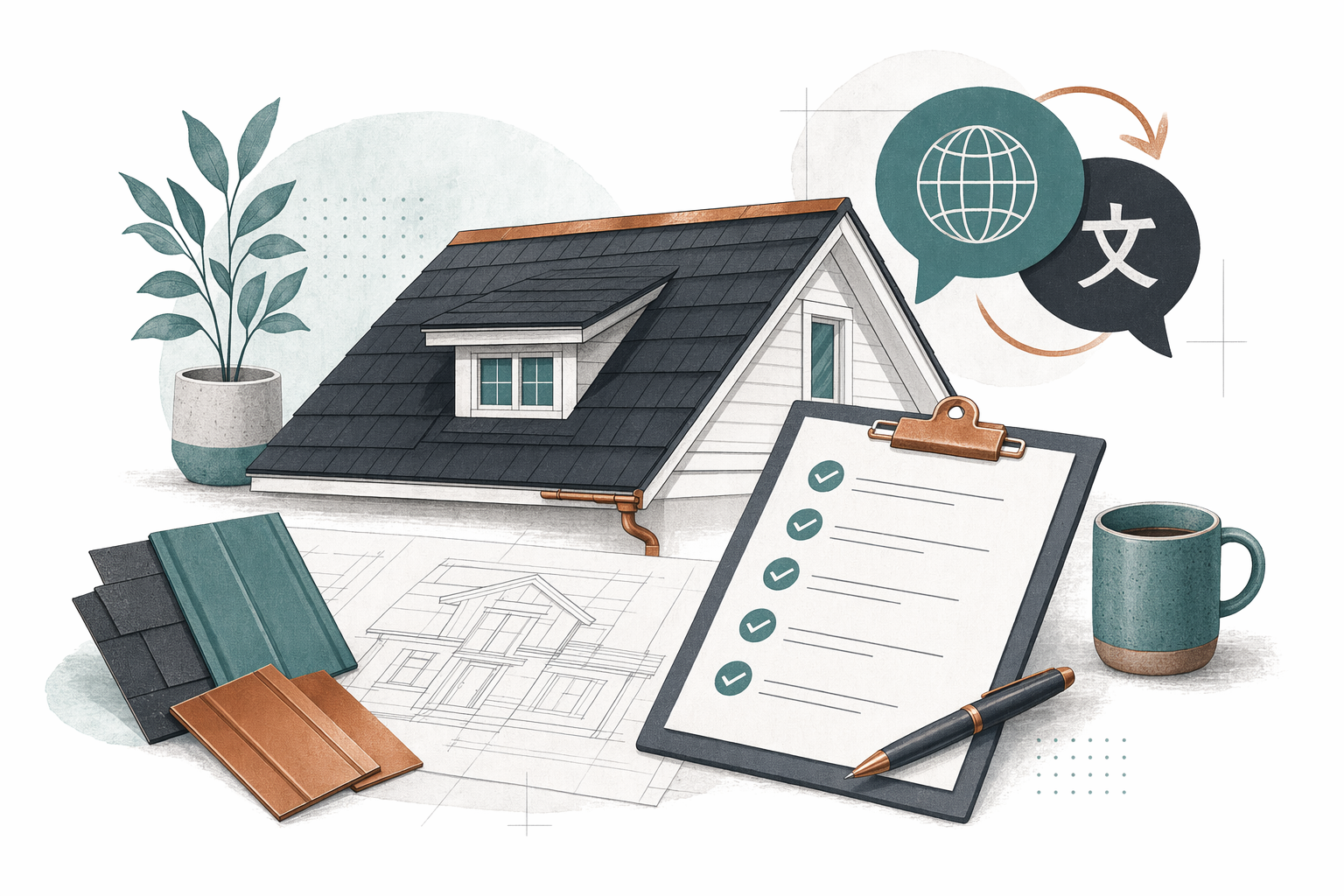
Start with the honest question: does metal make sense for your home?
A metal roof is not the cheap option up front. In many US markets, asphalt is still the lower-cost choice. But metal often lasts much longer.
Typical lifespan:
- Metal: about 40-70 years
- Asphalt shingles: about 15-25 years
That longer life is why some homeowners choose metal. It can also be a good fit if you want strong wind performance, lower maintenance, and a clean look.
But metal is not always the smart buy. Asphalt may be the better call if:
- you may sell the home soon
- your budget is tight right now
- the house is a rental and you need the lowest upfront cost
- you do not plan to stay long enough to benefit from the longer lifespan
If you want a side-by-side look, read metal vs asphalt. If your main goal is to understand how long different systems last, see metal roof lifespan.
For many new immigrants and first-time US homeowners, the best first step is simple: learn the system names, compare written estimates, and do not rush a deposit.
What to look at before you choose a metal roof
Not all metal roofs are the same. The price, appearance, noise level, warranty, and long-term performance depend on the product and on the installer.
Here are the big things to check:
1. Roof shape and pitch
A simple roof with fewer valleys, dormers, skylights, and chimneys is usually easier and less expensive to roof. A steep roof often costs more because labor is harder and safety setup is more involved.
2. The metal profile
Common residential choices include:
- standing seam for a cleaner, more modern look
- metal shingle if you want a look closer to traditional shingles, slate, or shake
- corrugated or ribbed panels for a more budget-friendly panel option on some homes and outbuildings
3. Gauge and coating
Ask exactly what metal thickness and finish are included. A cheaper estimate may use a lighter gauge or a different coating system. Get this in writing.
4. Tear-off or overlay
Removing old roofing adds labor and dump fees. In some areas, local code or the condition of the roof deck may make tear-off the better path. Follow local permit and building-code rules.
5. Trim, flashing, and ventilation
A roof is not just panels. The details around chimneys, valleys, walls, vents, and edges matter a lot. Bad detail work causes leaks.
6. Your local climate
Snow load, coastal air, hail risk, strong sun, and hurricane exposure can affect material choices and installation details. That is one reason national online price claims are often misleading.
Most important: hire licensed, insured, bonded roofers and verify the license and insurance yourself. Before any deposit, get the metal type, gauge, coating, warranty, full scope, and price in writing.
Typical costs: what US homeowners usually see
Here are typical installed price ranges, not quotes or guarantees:
- Corrugated/ribbed metal: about $5-$9 per sq ft
- Metal shingle: about $9-$14 per sq ft
- Standing seam metal: about $10-$18 per sq ft
- Asphalt shingles: about $4-$8 per sq ft
The real price depends on:
- roof size
- roof pitch and complexity
- the metal and coating chosen
- tear-off needs
- your area and local labor costs
Example only: if a home has 2,000 square feet of roof area, the installed cost might land somewhere around:
- corrugated/ribbed: $10,000-$18,000
- metal shingle: $18,000-$28,000
- standing seam: $20,000-$36,000
- asphalt: $8,000-$16,000
These are rough planning numbers only. They are not bids. Real estimates can move up or down based on layout, deck repairs, underlayment, trim details, and your market. For broader pricing help, visit costs.
A good rule for new homeowners: if one metal estimate is far below the others, do not assume you found a deal. It may be missing tear-off, upgraded trim, thicker metal, better coating, permit costs, or cleanup.
Also be careful with storm talk. After hail or wind, a roofer can inspect and document visible conditions, but no one should promise your insurance company will pay. Work with your own insurer and a licensed roofer, and read every document before signing.
How to compare roofers without getting burned
A roofing estimate can look official and still leave out important details. Slow down and compare line by line.
Use this checklist:
- Verify license, insurance, and bond yourself
- Confirm who pulls permits and whether permit fees are included
- Ask for the exact metal product name, gauge, and coating
- Check whether old roofing is removed or covered over
- Ask what underlayment, flashing, trim, and fasteners are included
- Read workmanship and manufacturer warranty terms carefully
- Make sure cleanup and debris removal are in writing
- Do not rely on verbal promises
Then compare the estimates in this order:
1. Scope of work
2. Material quality
3. Warranty details
4. Timeline
5. Price
Price matters, of course. But the cheapest number is not always the lowest-risk choice.
If you want help finding companies to compare, get matched with licensed, insured, bonded metal roofers in your area. SeamRidge is a free matching service, not a roofing company or installer. Participating roofers pay a flat fee to take part. You compare estimates, you choose who to hire, and you hold the final payment.
If you want a stronger screening list before you call anyone, read how to vet a metal roofer.
A simple next step for a new US homeowner
If this is your first roof project in the US, do not try to master everything in one day. Do this instead:
- Decide your goal: lowest upfront cost, longest lifespan, or best long-term value.
- Learn which metal style fits your home and budget.
- Check whether your city or county may require permits. See metal roof permits.
- Get 2-4 written estimates from licensed, insured, bonded roofers.
- Compare the material details, not just the bottom-line price.
- Do not pay based on pressure or fear.
That steady approach helps you avoid the two common mistakes: overpaying for a roof you do not need, or buying a cheap job that leaks later.
A metal roof can be a very good long-term choice. It is just not the right choice for every homeowner, every budget, or every timeline. Honest comparison beats sales pressure every time.
In plain English
Metal roofs usually cost more than asphalt, but they often last much longer. If you are new to US homeownership, get 2-4 written estimates from licensed, insured, bonded roofers, compare the material details carefully, verify permits and insurance yourself, and choose the option that fits your budget and how long you plan to stay.