Metal Roof Gauge and Thickness Explained
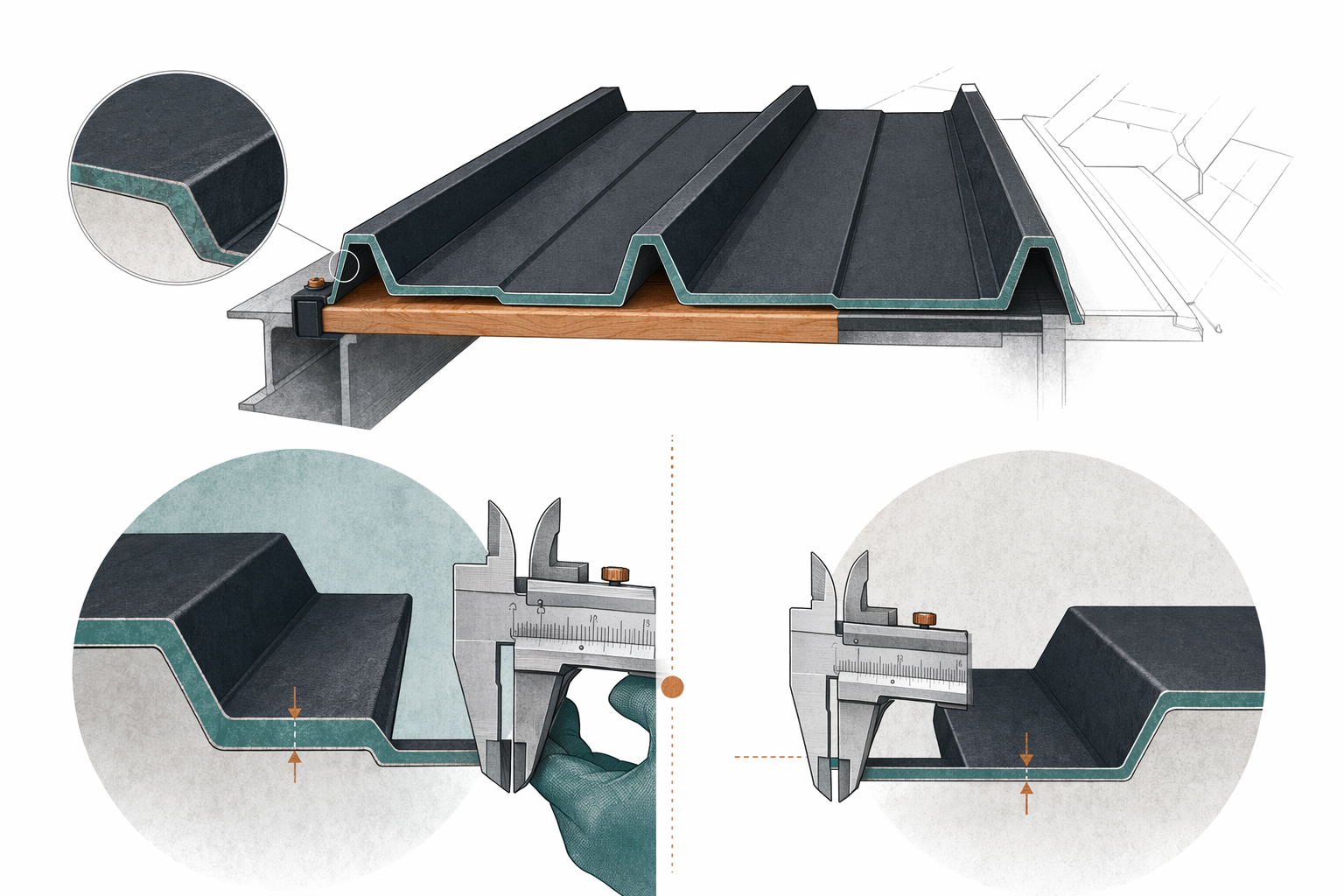
Metal roof gauge can look confusing at first. The simple idea is this: **a lower gauge number usually means thicker steel**, but gauge is only one part of the picture.
The short answer homeowners need
If you are comparing metal roof estimates, gauge matters because it affects strength, dent resistance, panel feel, and sometimes price. But it does not tell you everything about quality.
For most homes, you will usually see steel roofing in these rough ranges:
- 29 gauge: thinner, often used on lower-cost corrugated or ribbed panels
- 26 gauge: a common step up for many residential projects
- 24 gauge: thicker, stronger, and often used on higher-end systems like some standing seam roofs
A few important truths:
- Lower number = thicker metal for steel roofing
- Thicker is often better for durability, but not every home needs the thickest option
- The paint/coating, panel design, installation quality, substrate, clips/fasteners, and warranty also matter
- If two bids both say “metal roof,” the gauge may be one reason one estimate is much higher
Typical installed cost ranges for a full roof are still broad. As a general guide, corrugated/ribbed metal often runs about $5-$9 per sq ft installed, metal shingle about $9-$14, and standing seam about $10-$18. By comparison, asphalt is often about $4-$8. These are typical ranges, not quotes, and the real price depends on roof size, pitch, the metal and coating chosen, tear-off, and your area.
If you want help comparing roof types first, see metal vs asphalt.
What “gauge” means, and why people get confused
Gauge is a sizing system used for sheet metal. In plain English, it is a shorthand for thickness. With steel roofing, 24 gauge is thicker than 26 gauge, and 26 gauge is thicker than 29 gauge.
Why the confusion?
- The numbers run backward. Lower number means thicker metal.
- Different metals may be measured differently. Steel, aluminum, copper, and zinc do not always compare the same way by gauge alone.
- Some sellers focus on gauge and skip the rest. That can hide important details.
For a homeowner, the practical takeaway is simple: when a contractor says “26-gauge steel,” ask a few follow-up questions:
- Is it galvanized steel or Galvalume steel?
- What paint system or coating is used?
- Is it a standing seam, metal shingle, or corrugated/ribbed panel?
- Is the panel exposed-fastener or concealed-fastener?
- What wind, hail, and finish warranty details are actually in writing?
A thicker panel can feel more solid and may resist denting better in some situations. But a thinner panel with a good design and good installation can still perform well. A bad installer can ruin a great panel. That is why gauge should be part of your decision, not the whole decision.
How thickness affects strength, dent resistance, noise, and price
Homeowners usually ask the same four questions: Will thicker metal last longer? Will it dent less? Will it be quieter? Is it worth the extra cost?
Strength and panel feel
Thicker steel usually feels stiffer. On some roofs, especially with longer panel runs or more demanding conditions, that can be an advantage. It may reduce waviness or “oil canning” in some systems, though panel width, profile, underlayment, deck flatness, clip design, and installation also affect that.
Dent resistance
In general, thicker steel can help with dent resistance. That matters if you get hail, falling branches, or a lot of foot traffic during maintenance. But no roof material is magic. A thicker panel is not a promise against storm damage, and no one should guarantee any insurance claim result. If storm damage happens, work with your own insurer and a licensed roofer to document the condition and understand your options.
Noise
Many people think thicker metal always means a much quieter roof. Real life is more nuanced. Roof noise depends a lot on:
- solid decking underneath
- underlayment
- attic insulation
- roof assembly details
- how well the system is installed
A properly installed residential metal roof over a solid roof deck is often not dramatically louder than people expect.
Price
Thicker steel often costs more, but the jump in price is not the same on every job. The total project price depends on far more than gauge alone, including:
- roof size and shape
- pitch and height
- tear-off and disposal
- trim and flashing complexity
- metal type and coating
- your local labor market
That is why the smart move is to compare written estimates with the same scope. If one bid is for 29-gauge exposed-fastener panels and another is for 24-gauge standing seam, those are not apples-to-apples. For a closer look at one common premium option, see standing seam.
Which gauge is common for residential roofs
There is no one perfect gauge for every home. The right choice depends on your budget, climate, roof design, and the type of metal system you want.
Here is a practical homeowner view:
- 29 gauge steel
- Often used for more budget-focused corrugated or ribbed panels
- Can make sense on simpler roofs and tighter budgets
- Usually not the first choice if you want a more premium feel or better dent resistance
- 26 gauge steel
- Very common in residential metal roofing
- Often a middle-ground choice for cost and strength
- Seen in many good-quality exposed-fastener and some concealed-fastener systems
- 24 gauge steel
- Thicker and often selected for higher-end residential projects
- Commonly discussed with some standing seam systems
- Can be a good fit in areas where owners want a sturdier panel and are willing to pay more up front
That said, more expensive is not always smarter. If you expect to move soon, or your budget is already stretched, asphalt may be the better call. Asphalt usually costs less up front and can be a sensible choice for a homeowner planning a shorter stay. Metal usually costs more up front, but it often lasts much longer: about 40-70 years for metal versus about 15-25 years for asphalt.
The goal is not to buy the thickest roof possible. The goal is to buy the right system for your house and timeline.
What to ask before you sign anything
Use this checklist when you compare estimates:
- Ask for the full panel description in writing. Get the metal type, gauge, profile, coating/paint system, fastener type, trim details, and warranty terms.
- Verify license and insurance yourself. Hire only licensed, insured, bonded roofers, and confirm the license and insurance are current.
- Compare the same scope. Make sure each estimate includes tear-off, underlayment, flashing, ventilation work if applicable, trim, cleanup, and permit responsibility.
- Ask about the roof deck condition. Rotten decking, uneven surfaces, or structural issues can change the plan and the price.
- Confirm permits and code compliance. Follow local permit rules and building code. If you are not sure what your area may require, read metal roof permits.
- Do not rely on verbal promises. Get the scope, total price, payment schedule, and product details in writing before any deposit.
- Keep control of the job. You compare estimates, you choose who to hire, and you hold the final payment until the agreed work is complete.
If you want help connecting with roofers to compare options, get matched for free. SeamRidge is a free matching service. We do not install roofs. Participating roofers pay a flat fee to be included, and you decide who, if anyone, to hire.
In plain English
Gauge is just the metal thickness number. Lower number usually means thicker steel, but do not choose by gauge alone. Compare the full system in writing, verify the roofer’s license and insurance yourself, and pick the option that fits your budget, climate, and how long you plan to stay in the home.