Metal roof myths — noise, lightning & more
Metal roofs get talked about like they are magical or terrible. The truth is simpler: some common fears are overstated, some concerns are real, and the right choice depends on your house, budget, and how long you plan to stay.
The short answer: most metal roof myths are half-true
A metal roof is not automatically loud, dangerous, or maintenance-free. It is also not the cheapest option up front. In many cases, it costs more than asphalt but lasts much longer.
Typical installed price ranges for many homes are:
- Asphalt: about $4-$8 per sq ft
- Corrugated or ribbed metal: about $5-$9 per sq ft
- Metal shingle: about $9-$14 per sq ft
- Standing seam: about $10-$18 per sq ft
Those are typical estimates, not quotes. Real price depends on roof size, pitch, the metal and coating chosen, tear-off, and your area. If you want a side-by-side cost reality check, see metal vs asphalt or broader metal roof costs.
Here is the honest version:
- If you want the lowest upfront cost, asphalt is often the smarter choice.
- If you plan to stay in the home a long time, a metal roof may make sense because it often lasts about 40-70 years versus about 15-25 years for asphalt.
- Not every house needs premium standing seam. In some cases, a simpler ribbed panel can fit the budget better.
The goal is not to "win" metal roofing. The goal is to buy the roof that fits your real life.
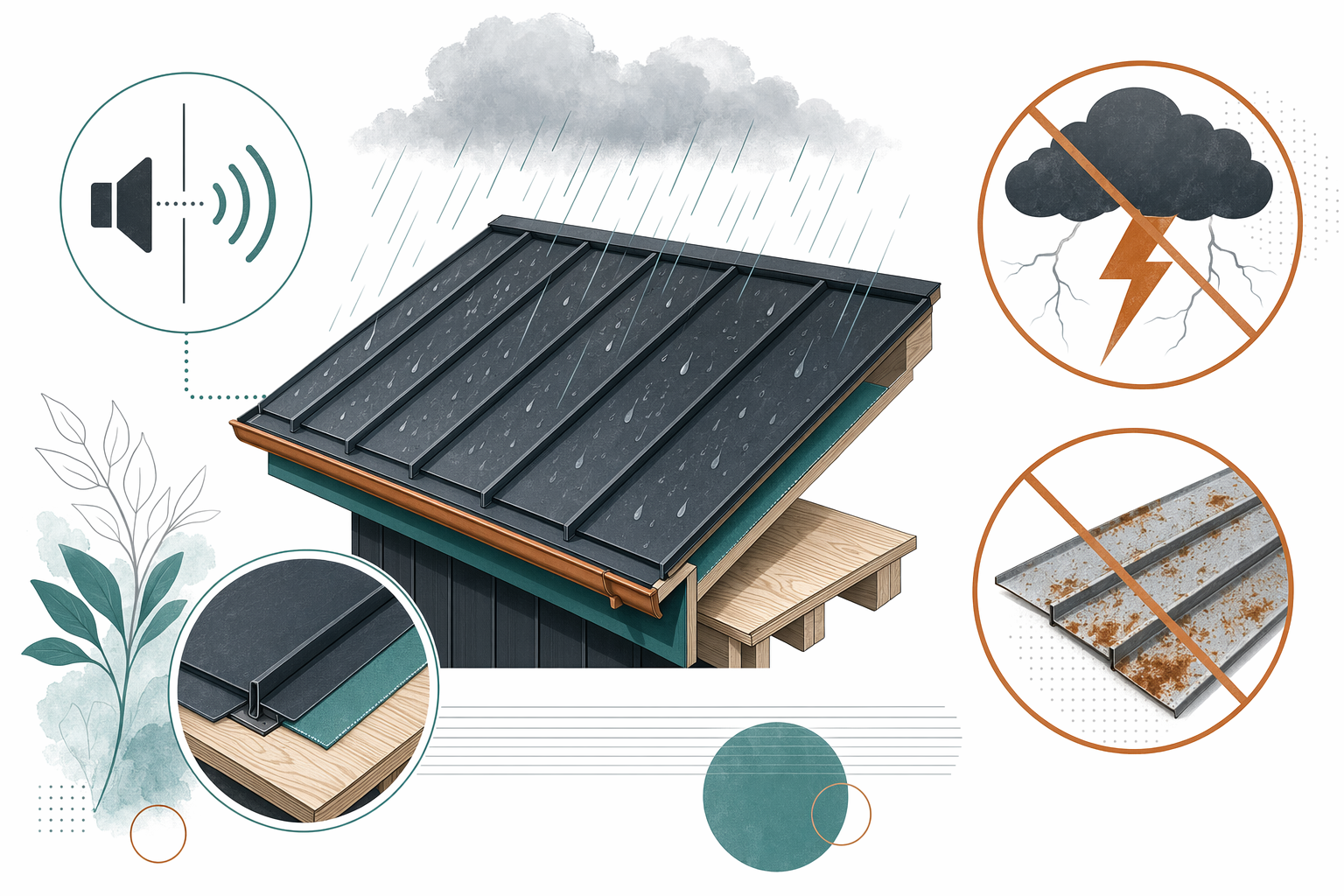
Myth: a metal roof is always loud in rain
This is probably the most common fear. On a house, it is usually exaggerated.
A properly installed residential metal roof is not just bare metal floating over open air. Most homes have roof decking, underlayment, attic insulation, and interior ceilings between you and the weather. That assembly matters a lot.
What is usually true:
- A metal roof on a home with solid sheathing and insulation is often not dramatically louder than other roofing.
- A metal roof on a barn, shed, porch cover, or exposed framing can sound much louder.
- Heavy rain or hail can be more noticeable on some systems than others.
Noise depends on:
1. Roof assembly - decking, underlayment, attic insulation, and ventilation
2. Panel type - for example, standing seam and exposed-fastener panels can sound different in different assemblies
3. Installation quality - loose trim, poor fastening, or bad detailing can create rattles or vibration
4. Your own sensitivity to sound - some people notice it more than others
So, is a metal roof loud? Sometimes a little, not always, and not automatically. If noise worries you, ask roofers how the full system is built, not just what the top layer is made of.
Myth: metal roofs attract lightning
This one sounds logical, but the usual claim is backwards. A metal roof does not attract lightning just because it is metal.
Lightning tends to strike the highest point in an area, or the path that best connects to the ground under the conditions present. Roof material alone is not the main reason a house gets struck.
Important nuance:
- Metal is conductive, but that does not mean it pulls lightning toward your house.
- If a home is struck, the behavior of the roofing system is only one part of a much bigger electrical event.
- Fire risk and safety should be discussed with qualified local professionals if you have special concerns, local code questions, or a lightning protection system.
What homeowners should do:
- Ask whether your local code has any requirements related to grounding or other electrical details.
- If you have a lightning protection system already, ask a qualified professional how roofing work may affect it.
- Follow local permits and code. A good place to start is metal roof permits.
A metal roof is not a magic shield, and it is not a lightning magnet. Treat it like any major roof decision: ask specific questions, get written scope, and verify local requirements.
Myth: metal roofs rust fast, dent easily, and always leak
These concerns are more grounded in reality, but they are often too broad. The truth depends on the metal type, panel design, gauge, coating, and installer skill.
Rust:
Not all metal roofs are equally vulnerable to corrosion. Coatings and material choice matter. In coastal or harsh environments, the wrong product can age badly. That does not mean all metal roofs rust quickly. It means the product should match the climate.
Dents:
Yes, some metal roofing can dent from hail or impact. Thin panels may show damage more easily than heavier products. Cosmetic denting and functional damage are not always the same thing. If hail is common where you live, ask specifically about impact performance and gauge.
Leaks:
Metal roofs do not "always leak," but they can leak if details are done poorly. Flashings, fasteners, penetrations, valleys, trim, and transitions matter. A cheap bid can become expensive if these details are sloppy.
Common mistakes homeowners make:
- Choosing by price alone
- Not asking what metal type, gauge, and coating are included
- Assuming every metal roof is standing seam
- Ignoring attic ventilation and existing deck condition
- Paying a large deposit before the full scope is in writing
Before you sign anything, get this in writing:
- exact product name and metal type
- gauge or thickness
- paint/coating system
- underlayment details
- tear-off or overlay scope
- flashing and trim scope
- workmanship and manufacturer warranty terms
- total price and payment schedule
And always hire licensed, insured, bonded roofers. Verify the license and insurance yourself. If you need help with the screening questions, see how to vet a metal roofer.
What a metal roof really does well — and where it may not be the best pick
Metal roofing has real strengths. It also has tradeoffs.
Where metal often shines:
- Long service life, often 40-70 years
- Lower routine replacement frequency than asphalt
- Good fit for homeowners planning to stay put for many years
- Can work well on many home styles, depending on the product
Where metal may not be the best fit:
- You may move in a few years
- You need the lowest upfront cost now
- Your local installer options are weak and few have strong metal experience
- You are comparing a premium metal option to a decent asphalt roof and the budget gap is just too large
This is where many homeowners get burned: they hear that metal "saves money" and assume it is always the best value. Sometimes it is. Sometimes it is not.
If your budget is tight and you expect to sell soon, asphalt may be the more practical call. That is not a failure. It is just matching the roof to the situation.
If you are planning for the long term, a well-specified metal roof can be worth a serious look. Learn more about typical service life at metal roof lifespan.
What to do next: compare local options without getting pushed
If you are considering metal roofing, keep the process simple and controlled.
- Decide your goal first. Are you optimizing for lowest upfront cost, long lifespan, curb appeal, or hail resistance?
- Learn the basic product types. Many homeowners compare corrugated or ribbed metal with standing seam or metal shingles without realizing they differ a lot in cost and look.
- Get multiple written estimates. Compare scope, not just total price.
- Verify license and insurance yourself. Also confirm the roofer is bonded where applicable.
- Read the paperwork before any deposit. Make sure product specs, warranty terms, and payment schedule are clear.
- Follow permits and local code. Do not skip this to save time.
SeamRidge is a free matching service. We do not install roofs or tell you which contractor to hire. We help homeowners understand the options and get connected with licensed, insured, bonded metal roofers so you can compare estimates and choose. If you want to start, use get matched.
That is the safest path for most homeowners: learn the basics, compare written estimates, and keep control of the decision and final payment.
In plain English
Metal roofs are not automatically loud or dangerous, but they are not automatically the best deal either. Learn the product, get written estimates from licensed, insured, bonded roofers, verify their credentials yourself, and choose the roof that fits your budget and how long you plan to stay.