Metal vs asphalt — the honest comparison
If you are choosing between metal and asphalt, the short truth is simple: **metal usually costs more up front, but often lasts much longer**. Asphalt is often the practical choice for a tight budget or a short time in the home.
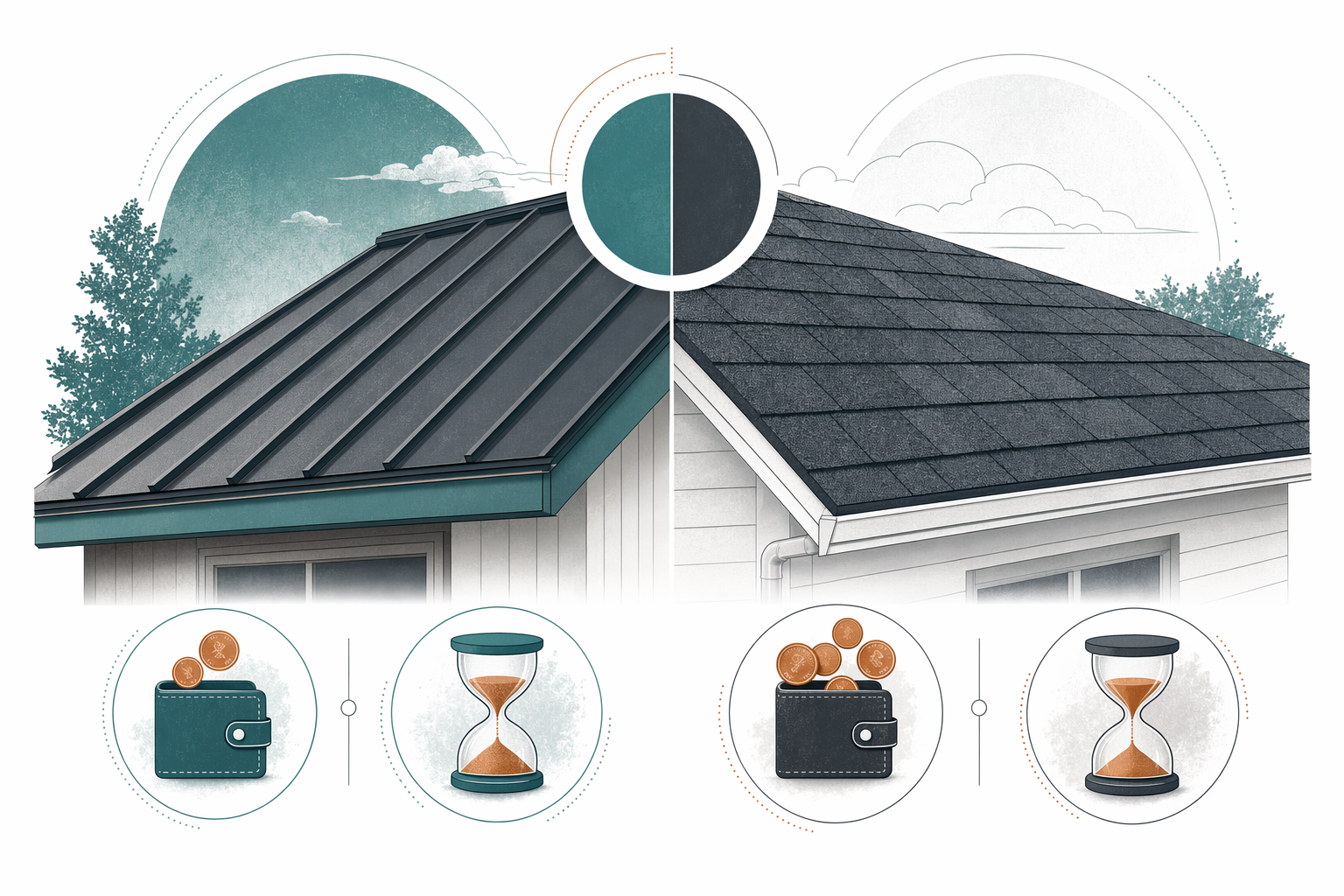
The quick answer: which roof fits which homeowner?
Both roofing types can make sense. The right choice depends on your budget, how long you plan to stay, your climate, and the quality of the installer.
Metal often fits best if:
- You plan to stay in the home a long time
- You want a roof that may last about 40-70 years
- You can afford a higher up-front cost now
- You want strong wind performance when installed correctly
- You like the look of standing seam, metal shingle, or ribbed panels
Asphalt often fits best if:
- Your budget is tight right now
- You may move in a few years
- You want the lower initial cost of a roof that typically lasts about 15-25 years
- Your neighborhood standard is asphalt and resale is your near-term goal
This is the part many sites skip: metal is not automatically the smarter buy. If you will sell soon, or if the metal upgrade would strain your budget, asphalt may be the more sensible decision. If you want the long game and can pay more now, metal may be worth a hard look.
For a side-by-side overview, see metal vs asphalt.
What it really costs
Installed price ranges vary by roof size, roof pitch, tear-off, underlayment, trim details, the metal and coating chosen, and your area. These are typical ranges, not quotes.
- Asphalt shingles: about $4-$8 per sq ft installed
- Corrugated or ribbed metal: about $5-$9 per sq ft installed
- Metal shingles: about $9-$14 per sq ft installed
- Standing seam metal: about $10-$18 per sq ft installed
A simple roof with easy access costs less than a steep roof with many valleys, dormers, skylights, chimneys, and damaged decking. Tear-off and disposal can also change the price a lot.
Here is the honest cost question to ask yourself: am I buying for the next 5 years, or the next 30?
Asphalt usually wins on first price. Metal may win on lifespan. But not every homeowner stays long enough to see that value. Also, not every metal product is the same. A lower-cost ribbed panel roof and a higher-end standing seam roof are both metal, but they are not the same system.
If you want help understanding current ranges before you talk to roofers, review typical metal roof costs.
Lifespan, maintenance, noise, and weather: the tradeoffs people care about
A roof is not just a price tag. Daily life matters too.
Lifespan
Metal roofs typically last about 40-70 years when the right product is installed well and maintained. Asphalt roofs commonly last about 15-25 years. Climate, ventilation, sun exposure, storm damage, and installation quality all matter. You can read more about that on metal roof lifespan.
Maintenance and repairs
Asphalt is familiar to more crews, and spot repairs can be straightforward. Metal can also be repaired, but the right method depends on the panel type, seams, fasteners, flashing details, and coating. A poor repair on metal can create new problems later.
Noise
Many homeowners worry that metal will sound much louder in rain. In a typical home with proper roof decking and attic insulation, the difference is often smaller than people expect. It is not usually like a barn or shed roof. Still, roof assembly matters.
Weather and fire
Metal can perform very well in wind and can shed snow and rain efficiently when installed correctly. Asphalt can also perform well, but product grade and installation quality matter. In wildfire-prone areas, some homeowners prefer metal for its non-combustible surface, though the full roof system and local code still matter.
Looks and neighborhood fit
Metal is no longer just a farm-style panel roof. Some homeowners love the cleaner lines of standing seam. Others prefer the traditional look of architectural asphalt. This is personal. There is no universal winner.
The biggest truth: the installer matters almost as much as the material. A great asphalt roof will usually beat a badly installed metal roof.
How to compare estimates the smart way
Do not compare only the bottom-line price. Compare the scope.
1. Ask for the exact material
Get the metal type, panel/profile, gauge, paint/coating, trim, underlayment, and ventilation details in writing. If you are comparing asphalt, get the shingle line and underlayment details in writing too.
2. Make sure tear-off and deck repair are addressed
Ask what is included, what is an allowance, and what triggers extra charges if damaged decking is found.
3. Read the warranty carefully
There may be a manufacturer warranty and a workmanship warranty. Ask what is covered, for how long, and what can void it.
4. Verify the roofer yourself
Hire licensed, insured, bonded roofers where required, and verify the license and insurance yourself. Do not rely only on a sales promise.
5. Check permits and code
Local permit and code rules matter, especially for reroofing, underlayment, fastener schedules, and whether an old roof can stay in place. See metal roof permits.
6. Do not hand over a deposit based on a vague proposal
Before any deposit, get the scope, material, warranty, cleanup, payment schedule, and total price in writing.
If you want a practical checklist for screening contractors, use how to vet a metal roofer.
Common mistakes that cost homeowners money
These mistakes happen all the time.
- Choosing by price alone. The cheapest estimate may leave out tear-off, underlayment upgrades, trim, or disposal.
- Comparing different systems like they are equal. Ribbed exposed-fastener panels, metal shingles, and standing seam are not apples to apples.
- Assuming all metal roofs last the same. Gauge, coating, panel design, climate, and workmanship all affect performance.
- Ignoring how long you will stay in the home. If you expect to move soon, paying much more for metal may not be your best use of cash.
- Not verifying insurance and license. Always check yourself.
- Taking verbal promises. Get the metal type, gauge, coating, warranty, scope, and price in writing.
- Skipping local rules. Permit and code issues can become your problem later, not just the contractor's.
One more honest point: if a salesperson pushes metal as the right answer for every house and every budget, be careful. Sometimes asphalt is the smarter call. A good pro should be willing to say that.
What to do next
If you are still deciding, keep it simple.
- First, decide your goal: lowest up-front cost or longer service life
- Next, compare at least 2-3 detailed estimates from licensed, insured, bonded roofers
- Ask each roofer to explain the material, scope, warranty, and permit plan in plain language
- Then choose the offer that gives you the best overall value, not just the lowest number
SeamRidge is a free matching service. We do not install roofs. We help homeowners understand options and get connected with roofers so you can compare estimates and choose who to hire. If you want to start, you can get matched with metal roofers in your area.
In plain English
If money is tight or you may move soon, asphalt may be the better choice. If you plan to stay longer and can afford more up front, metal may be worth it. Either way, compare detailed written estimates from licensed, insured, bonded roofers, verify their credentials yourself, and do not choose on price alone.