Steel vs Aluminum Metal Roofing
Both steel and aluminum can be good metal roofs. The better pick depends on your climate, your budget, your roof design, and how long you plan to stay in the home.
The short answer
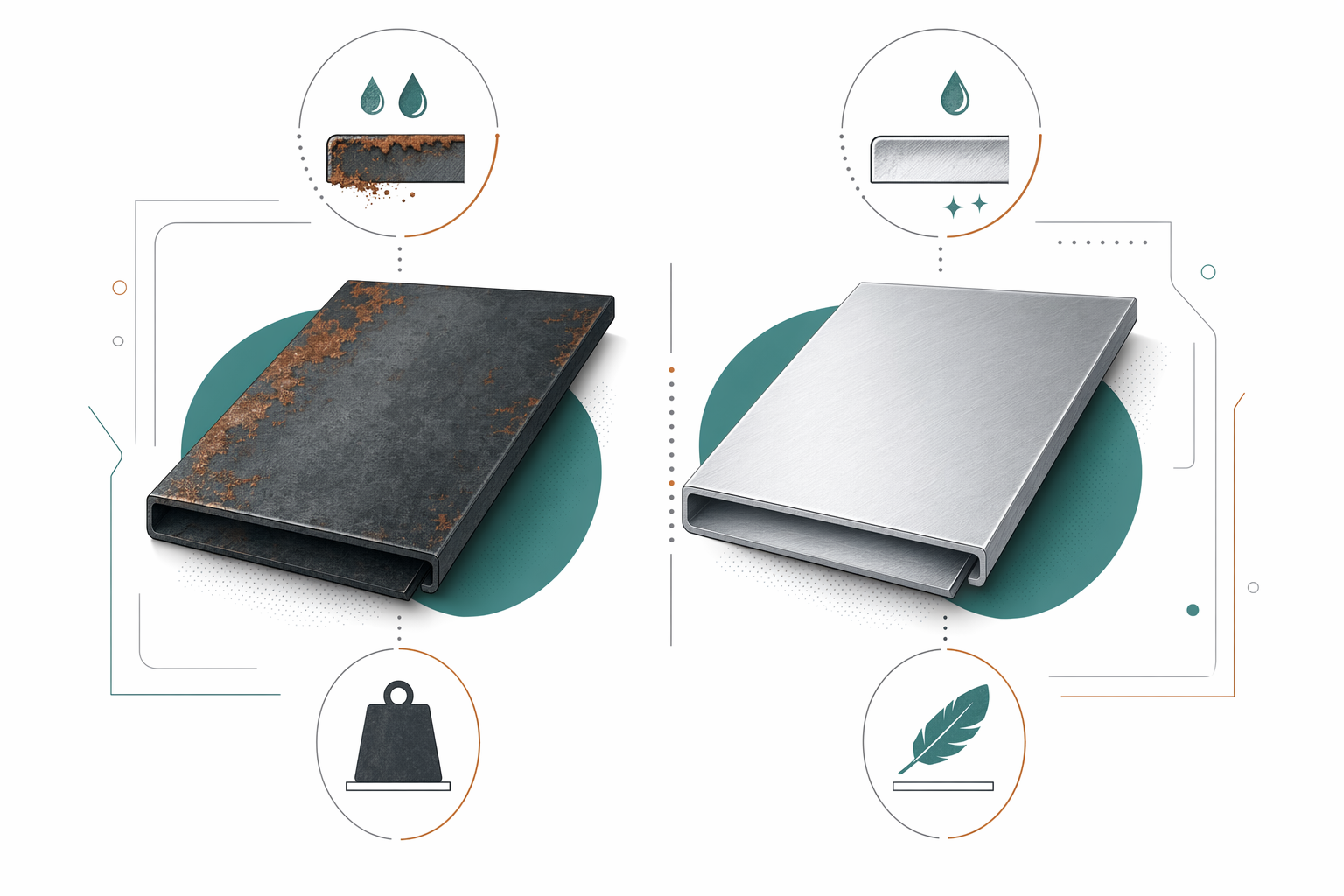
Steel is usually the value choice. Aluminum is usually the corrosion-resistance choice. For many inland homes, painted steel gives a strong mix of price, durability, and style. For coastal homes or places with salty air, aluminum often makes more sense because it does not rust the way steel can.
A few plain truths:
- Steel usually costs less than aluminum for a similar profile.
- Aluminum is lighter and naturally resists corrosion very well.
- Both can last a long time when the right product is installed correctly.
- Neither is automatically “best.” Roof pitch, panel style, trim details, fasteners, underlayment, ventilation, and installer skill matter a lot.
If you are still deciding whether metal is worth the higher upfront cost at all, compare the bigger picture at metal vs asphalt first. Metal often lasts about 40-70 years, while asphalt often lasts about 15-25 years. But asphalt may still be the smarter call if you expect to move soon or need the lower upfront price.
How steel and aluminum differ in real life
Homeowners often get stuck on the metal itself. That matters, but what you live with day to day is a mix of material + profile + coating + installer quality.
Steel
Steel roofing is commonly galvanized or Galvalume-coated, then painted. That protective system is what helps it resist corrosion. It is widely available and comes in many looks, including standing seam, metal shingles, and exposed-fastener panels.
Typical strengths:
- Lower upfront cost than aluminum in many markets
- Strong and rigid panels
- Widely available colors and profiles
- Good fit for many inland climates
Things to watch:
- If the coating is damaged or the wrong product is used in a harsh environment, corrosion risk goes up
- Cut edges, scratches, and poorly matched fasteners can become problem spots
- Near saltwater, steel needs very careful product selection and detailing
Aluminum
Aluminum does not contain iron, so it does not rust like steel. That is why it is common in coastal areas. It is also lighter, which can help on some homes, though structural questions should be handled by a licensed roofer and local code officials, not by a matching service.
Typical strengths:
- Excellent corrosion resistance, especially in coastal air
- Lightweight
- Good long-term choice where salt spray is a concern
Things to watch:
- Usually higher cost than steel
- Softer metal, so some products may dent more easily depending on thickness and profile
- Not every contractor offers the same aluminum options
If you want examples of common metal roof styles, see standing seam or corrugated and ribbed panels. The same steel-vs-aluminum question can show up in several panel types.
Cost, lifespan, noise, hail, and coastal use
Here is the honest homeowner version.
Cost
Installed price depends on roof size, pitch, panel style, the metal and coating chosen, tear-off, trim complexity, and your area. These are typical ranges, not quotes.
- Corrugated or ribbed metal: about $5-$9 per sq ft installed
- Metal shingles: about $9-$14 per sq ft installed
- Standing seam: about $10-$18 per sq ft installed
- Asphalt shingles: about $4-$8 per sq ft installed
Within those metal ranges, steel is often on the lower end and aluminum is often higher, especially for standing seam systems. But local supply and contractor preference can move the price either way.
Lifespan
Both steel and aluminum roofs can fall into the rough 40-70 year life range when the product fits the environment and the installation is done well. That does not mean every roof will hit the high end. Climate, maintenance, ventilation, panel movement details, and coating quality all matter. For a fuller breakdown, read metal roof lifespan.
Noise
Many homeowners worry that metal will be much louder in rain. In a full residential roof system with sheathing and underlayment, the difference is often smaller than people expect. Panel type and assembly matter more than just steel vs aluminum.
Hail and denting
No roof material is magic in severe hail. In general, panel profile, thickness, substrate, and installation details matter a lot. Aluminum is a softer metal than steel, so dent resistance may differ, but you should compare the actual product specs, not just the base metal name.
Coastal use
This is where aluminum often stands out. If your home is near the ocean, bay, or other salty environment, ask specifically what the manufacturer recommends for that exposure. A cheap steel panel that looks fine on day one can be the wrong choice near salt air. In many inland areas, though, steel remains a practical and cost-conscious option.
What to ask roofers before you choose
Do not stop at “steel” or “aluminum.” Get the full system in writing before any deposit.
- Ask for the exact metal type and thickness. If they say steel, ask what kind of protective coating is used. If they say aluminum, ask the thickness and product line.
- Ask for the exact panel profile. Standing seam? Exposed fastener? Metal shingle? Profile changes price and performance.
- Ask about the paint/coating warranty and the weathering warranty. Those are not always the same thing.
- Ask what fasteners and trim pieces will be used. Mismatched metals and weak details can create problems.
- Ask how penetrations, valleys, and transitions will be flashed. Good trim work matters.
- Ask whether tear-off, underlayment, disposal, and permit costs are included.
- Ask what maintenance they recommend for your climate.
And always protect yourself:
- Hire licensed, insured, bonded roofers where required
- Verify the license and insurance yourself
- Get the metal type, gauge or thickness, coating, warranty, scope, and total price in writing
- Follow local permits and building code; if you need a starting point, read metal roof permits
- Hold final payment until the agreed work is done
If you want help gathering estimates from roofers who handle metal roofing, you can get matched for free. SeamRidge is a matching service. You compare estimates, you choose who to hire.
What to do next
If you want the simple rule of thumb, use this:
- Choose steel first if you are inland, want to control upfront cost, and you have access to a roofer with a good track record on the exact steel system you want.
- Choose aluminum first if you are near the coast or you know corrosion resistance is your top concern.
- Choose asphalt instead if your budget is tight or you may sell soon and the metal premium will not pay you back in your timeframe.
Then do three practical things:
- Get at least 2-3 written estimates for the same roof area and similar scope.
- Compare not just price, but metal type, panel style, thickness, coating, trim details, warranty, and tear-off.
- Check references and confirm the roofer is licensed, insured, and bonded before you sign.
That is the real decision. Not steel vs aluminum in a vacuum, but which complete roof system fits your home, your weather, and your budget.
In plain English
If you live inland and want lower upfront cost, steel is often the practical pick. If you live near the coast, aluminum is often worth the extra money for better corrosion resistance. Get written estimates, verify license and insurance yourself, and compare the full roof system before you decide.