Storm damage & metal roof repair
Storm can damage a metal roof in different ways. Some problems are small and repairable. Others mean a larger section, or the full roof, needs work. SeamRidge is a free matching service that helps you compare licensed, insured, bonded metal roofers.
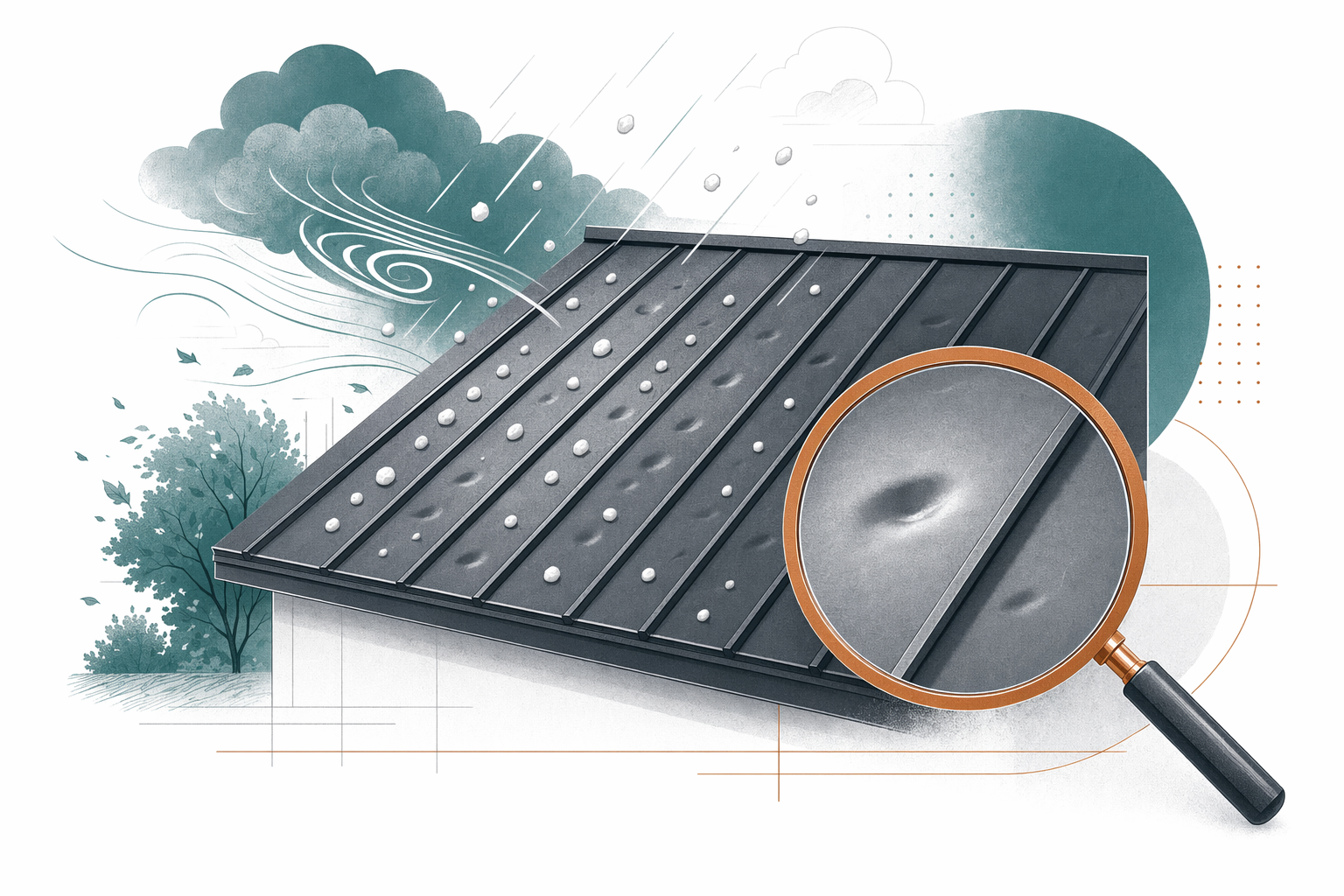
What storm damage looks like on a metal roof
Metal roofs are tough, but they are not damage-proof. Wind, hail, flying branches, and heavy rain can still cause problems. The good news is that many issues can be repaired if they are found early.
Common storm damage includes:
- Loose or lifted panels after high wind
- Bent flashing around chimneys, skylights, vents, and valleys
- Backed-out fasteners on exposed-fastener systems
- Dents from hail that are cosmetic, functional, or both
- Scratches or coating damage that may lead to rust over time
- Leaks at seams, penetrations, or transitions where water gets under metal
- Damage from fallen limbs that bends panels or weakens trim pieces
Not all dents mean the same thing. A roof can have cosmetic hail marks and still keep water out. It can also look mostly fine from the ground but have loosened seams, punctures, or flashing failure. That is why a proper inspection matters.
If your roof is older, the storm may expose existing weak points. A storm does not always create a brand-new problem. Sometimes it pushes a worn area past the point where it starts leaking.
Repair or replacement? Start with a real inspection
A careful roofer should tell you whether your roof needs a spot repair, a section repair, or a full replacement. Be cautious with anyone who jumps straight to the biggest job without explaining why.
In many cases, repair makes sense when:
- damage is limited to a small area
- the metal panels are still available or can be closely matched
- seams and underlayment are mostly sound
- the roof still has good years left
Replacement may make more sense when:
- multiple sections were lifted or bent by wind
- hail damage affected locks, seams, or protective coating across the roof
- water got under wide areas of paneling
- the roof is near the end of its useful life
- the existing system was installed poorly and keeps failing
The type of metal roof matters too. A screw-down corrugated or ribbed roof may have issues with exposed fasteners and washers after storms. A standing seam roof can do very well in wind, but repairs can be more specialized and may cost more because of the panel system and clips. If you are not sure which roof you have, ask the roofer to identify the metal type, gauge, coating, and panel profile in writing.
If you want help comparing repair-minded pros, you can start with free matching.
Typical storm repair costs for metal roofs
There is no honest one-price answer here. Storm repair costs are estimates, not quotes. The real price depends on roof size, pitch, how easy the roof is to access, the metal and coating chosen, whether tear-off is needed, how much trim or flashing is damaged, and your area.
Typical ranges homeowners often see:
- Small metal roof repair: about $300-$1,500
- Moderate repair with panel, flashing, or fastener work: about $1,500-$5,000
- Larger section repairs after wind or hail: about $5,000-$12,000+
If storm damage is widespread and replacement becomes the smarter path, installed costs often fall in these rough ranges:
- Corrugated/ribbed metal: about $5-$9 per sq ft
- Metal shingle: about $9-$14 per sq ft
- Standing seam: about $10-$18 per sq ft
- Asphalt shingles for comparison: about $4-$8 per sq ft
Metal usually costs more up front than asphalt. That is the truth. But metal often lasts about 40-70 years, while asphalt is often about 15-25 years. If you plan to stay in the home for a long time, metal can make financial sense. If your budget is tight or you expect to move soon, asphalt may be the smarter call.
For a broader price breakdown by roof type, see metal roof cost ranges and metal vs. asphalt.
How the storm and insurance process usually works
Insurance is where people often hear bad promises. Be careful. No roofer and no matching service can honestly guarantee a claim outcome. Coverage depends on your policy, your insurer's inspection, the cause of damage, prior roof condition, and other facts.
A neutral, normal process usually looks like this:
- Document what you can safely see. Take photos from the ground if possible. Do not climb a wet or damaged roof.
- Call your insurer. Ask how they want storm damage reported and what your next steps are.
- Have a licensed roofer inspect the roof. They can document visible damage, explain repair vs. replacement, and give you a written scope.
- Meet the adjuster if needed. Some homeowners ask their roofer to be present during the inspection to point out roofing details. That does not guarantee any result.
- Review the paperwork yourself. Make sure the scope matches the real damage and the metal system proposed.
- Compare estimates. You choose who to hire.
Good roofers can explain what they observed and what repairs may be needed. They should not tell you that your claim is certain to be approved. They should also not pressure you to sign over control before you understand the scope.
Work with your own insurer and a licensed roofer. Keep copies of photos, inspection notes, scope of work, and any permit records.
Pros and cons of repairing storm-damaged metal
Repair is not always better. Replacement is not always better either. The right choice depends on damage, age, and cost.
When repair is a good move
- Lower up-front cost than replacement
- Faster when damage is limited
- Lets you keep a roof that still has many years left
- May solve leaks caused by flashing, fasteners, or a damaged panel section
Limits of repair
- Matching older panel color or profile can be hard
- Cosmetic dents may remain even if the roof is watertight
- Some hail damage affects coating in ways that show up later
- Repeated patching on an older roof can become false economy
When replacement may be worth it
- Damage is spread across many areas
- The roof is already aging out
- The panel system is obsolete or hard to match
- Underlayment, decking, or trim damage is broader than expected
If your roof still has solid structure and limited damage, repair can be the smart choice. If it has wide damage and only a few years left anyway, replacement may save money and frustration over time. A good contractor should be able to explain both paths plainly, not just push the bigger sale.
What to ask before you sign anything
This is where homeowners protect themselves. Get details in writing before any deposit.
Ask each roofer:
- Are you licensed, insured, and bonded for this work in my area?
- Will you inspect the roof yourself and provide a written scope?
- Is this a repair, a section replacement, or a full replacement recommendation, and why?
- What exact metal type, gauge, coating, panel profile, and color are you proposing?
- Will the new section match the existing roof? If not, how different will it look?
- What flashing, underlayment, fasteners, and sealants are included?
- Will you replace damaged trim, ridge cap, pipe boots, or valley metal?
- Who pulls permits if required, and how will local code be handled?
- What workmanship warranty is included, and what material warranty applies?
- What is the payment schedule, and when is final payment due?
Also protect yourself with these rules:
- Verify license and insurance yourself
- Get the full scope, materials, warranty, and total price in writing
- Do not rely on verbal promises
- Do not make final payment until the agreed work is complete
- Follow local permit and building code requirements
If you need a checklist, read how to vet a metal roofer and permit basics for metal roofing.
How SeamRidge helps
SeamRidge does not install roofs or do repairs. We are a free matching service for homeowners.
Here is how it works:
- You share basic project and contact details.
- We help match you with licensed, insured, bonded metal roofers in your area.
- You compare inspections, scope details, timelines, and price ranges.
- You choose who to hire, if anyone.
Matching is free to homeowners. Participating roofers pay a flat fee to be included. That means you can focus on comparing the work, not chasing random door-knockers after a storm.
If you want to start comparing local options, use SeamRidge matching.
In plain English
After a storm, get a licensed, insured, bonded metal roofer to inspect the roof, put the metal type and repair scope in writing, and compare estimates before you sign. Insurance may or may not cover the damage, so work with your own insurer and keep control of the final choice and final payment.