Tear-off, underlayment & installation
This is the part of a metal roofing job that decides how well the roof performs for decades. The panels matter, but the tear-off, deck repair, underlayment, flashing, and installation details matter just as much.
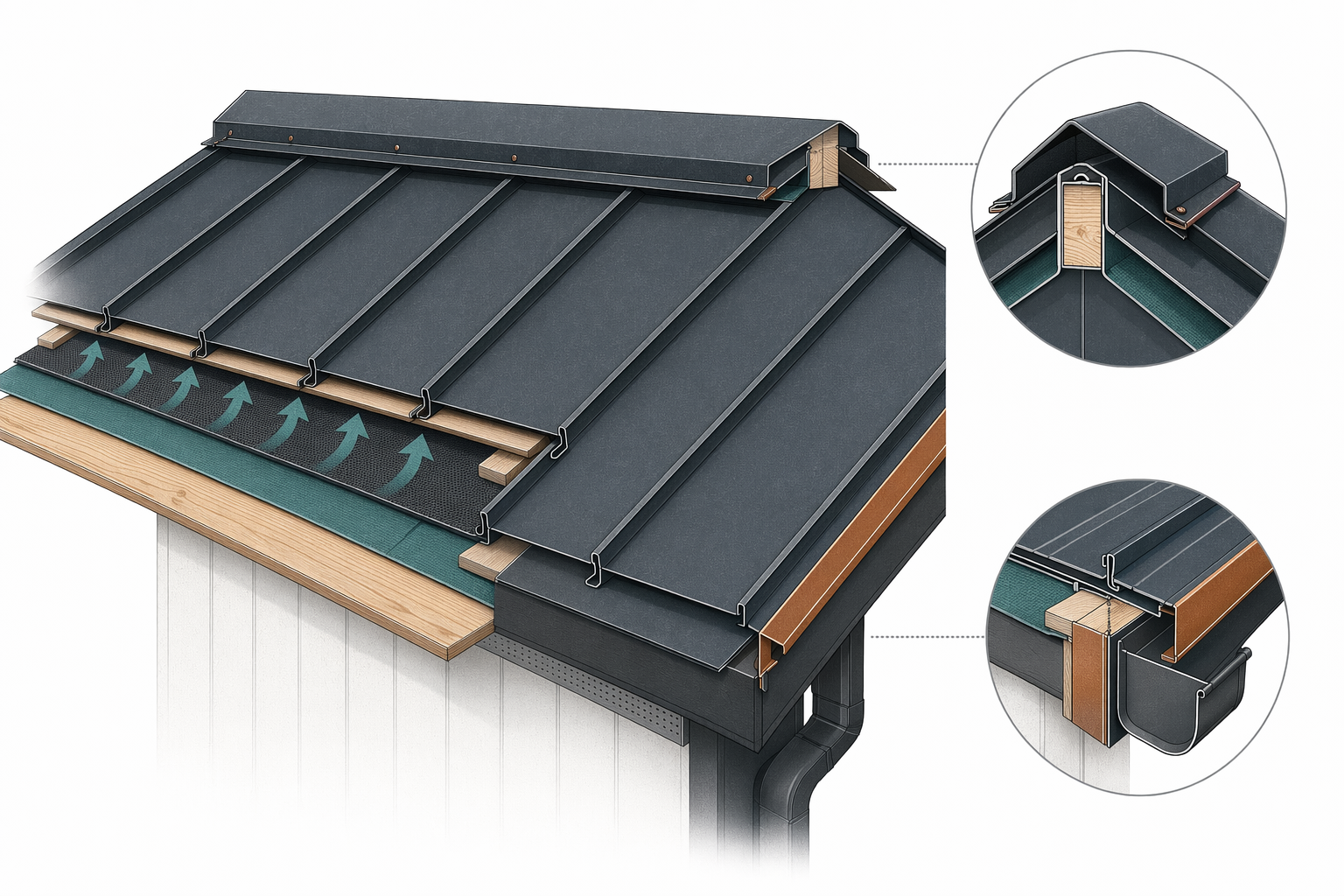
What this part of the job really includes
When homeowners hear "metal roof install," they often picture the visible panels only. In real life, the job usually starts earlier and goes deeper.
A full project may include:
- Tear-off of old shingles or other roofing
- Inspection of the roof deck after the old roof comes off
- Replacement of any rotted or damaged decking as needed
- New underlayment over the deck
- Ice and water protection in required or vulnerable areas
- New flashing, pipe boots, trim, and ridge vent details
- Installation of the metal system itself, such as standing seam, metal shingle, or corrugated/ribbed panels
That is why two roofs that look similar from the street can have very different prices and very different long-term results.
Important: SeamRidge is a free matching service. We do not install roofs or give construction advice. We help you understand the process and get connected with licensed, insured, bonded metal roofers so you can compare estimates and choose who to hire.
How tear-off, underlayment, and installation usually work
A good metal roofing job is a sequence. If one step is rushed, the roof can leak, oil-can, rust early, or fail around edges and penetrations.
1. Protection and prep
The crew protects landscaping, siding, windows, and driveways as much as practical. Dump trailers or containers may be brought in.
2. Tear-off
Old roofing is removed down to the deck when a full tear-off is part of the scope. This gives the roofer a clear view of the wood below.
3. Deck inspection and repairs
The roofer checks for soft spots, rot, delamination, nail damage, and uneven areas. Any deck replacement should be listed clearly as included, excluded, or billed if needed.
4. Underlayment and waterproofing layers
Underlayment goes over the deck. In valleys, eaves, penetrations, and other vulnerable spots, extra waterproof protection may be used depending on climate, code, and roof design.
5. Flashing and trim details
This includes chimneys, walls, skylights, plumbing vents, valleys, drip edge, rake trim, and ridge details. A lot of roof problems start here, not in the field panels.
6. Panel or shingle installation
The metal roofing system is installed according to the manufacturer specs and local code. Fastener placement, clip spacing, seam details, and expansion allowance matter.
7. Cleanup and final walkthrough
The crew removes debris and does a magnet sweep for nails when relevant. You review the scope, warranty documents, and any open items before final payment.
If you are still deciding on metal versus asphalt, compare lifespan and upfront cost honestly at metal vs asphalt.
Typical cost ranges for tear-off and metal roof installation
Here is the plain truth: metal usually costs more up front than asphalt. The tradeoff is that a properly installed metal roof often lasts about 40-70 years, while asphalt is often about 15-25 years.
Typical installed price ranges for the full roof system are often around:
- Corrugated or ribbed metal: about $5-$9 per sq ft installed
- Metal shingle: about $9-$14 per sq ft installed
- Standing seam: about $10-$18 per sq ft installed
- Asphalt shingles: about $4-$8 per sq ft installed
These are typical estimates, not quotes. Your real price depends on:
- Roof size
- Roof pitch and complexity
- The metal type and panel profile
- Gauge and coating
- Tear-off amount and disposal
- Deck repair needs
- Flashing and trim complexity
- Skylights, chimneys, valleys, and penetrations
- Your area and labor market
Tear-off itself is only one line item. Underlayment, deck repairs, trim, and the installation method can move the price meaningfully.
A low number is not always a good deal. Sometimes it means thinner metal, lighter trim, fewer accessories, vague deck-repair terms, or shortcuts on flashing.
If you want a broader breakdown of material and labor ranges, start with costs.
How underlayment affects lifespan and leak protection
Underlayment is the layer between the roof deck and the metal roofing material. Homeowners do not see it when the job is done, but it plays a big role in moisture control and backup protection.
Why it matters:
- It helps protect the deck if wind-driven rain gets past the outer roofing layer
- It can reduce damage during installation before the metal is fully on
- It supports long-term performance around vulnerable details
- It may be part of meeting manufacturer requirements or local code
A metal roof can last a long time, but only when the whole assembly is done well. Metal is durable, not magic. If the deck is bad, the underlayment is wrong for the application, or the flashing is sloppy, the roof can still fail early.
Ask the roofer to explain, in simple words:
- What underlayment they plan to use
- Where they will use extra waterproofing protection
- How they handle valleys, sidewalls, chimneys, skylights, and vents
- Whether the installation matches manufacturer requirements
You can read more about expected longevity at metal roof lifespan.
Pros, cons, and when asphalt may be the smarter choice
Metal roofing has real strengths. It also has a real price premium. Both can be true.
Why homeowners choose metal
- Long lifespan, often 40-70 years
- Lower maintenance than many homeowners expect when installed well
- Strong performance in many climates
- Clean look, especially with standing seam
- Often lighter than people assume
The downsides
- Higher upfront cost than asphalt
- More skill-sensitive installation
- Bad detailing can cause expensive problems
- Some profiles are noisier than homeowners expect if the assembly is not done right
- Repairs and matching older panels can be more specialized
When asphalt may be the smarter call
- You have a tight budget right now
- You do not expect to stay in the home long
- The house may be sold soon and you may not recover the metal premium
- The roof shape is simple and you want the lower upfront cost
That is not anti-metal. It is just honest. For some households, asphalt is the better fit today. For others, paying more once for metal makes sense over a longer ownership timeline.
The key is to compare the system, not just the top-line number.
What to ask before you sign anything
Use this checklist before any deposit. Get every answer in writing.
- Is the roofer licensed, insured, and bonded for this work in my area?
- What exact metal system is being installed?
- What gauge is the metal?
- What coating/finish is included?
- Is tear-off included? How many layers?
- What happens if damaged decking is found?
- What underlayment is included?
- What flashing and trim pieces are included?
- Are permits included, and who is responsible for them?
- What warranties apply to materials and workmanship?
- How will cleanup and nail/debris removal be handled?
- What is the payment schedule, and what triggers final payment?
Also ask for the full written scope to show:
1. Material brand or product line
2. Panel profile or shingle style
3. Thickness/gauge
4. Color and coating
5. Underlayment type
6. Flashing scope
7. Tear-off and disposal terms
8. Permit responsibility
9. Total price and any clearly defined allowances
Before hiring, verify the roofer's license and insurance yourself. Do not rely only on a business card, ad, or verbal promise. Follow local permit and code requirements. If you want a step-by-step screening list, use how to vet a metal roofer.
Permits, weather, and how to compare estimates the right way
Homeowners often compare only the final price. That is where people get burned.
Compare estimates side by side for:
- Same roof areas and tear-off assumptions
- Same metal type and profile
- Same gauge and finish/coating
- Same underlayment scope
- Same flashing and trim scope
- Same warranty terms
- Same cleanup, disposal, and permit responsibilities
If one estimate is much cheaper, ask what is missing. It may be a good deal. It may also be thinner metal, less trim, vague deck-repair language, or fewer details around penetrations.
Weather and timing matter too. Tear-off and installation can be delayed by rain, high wind, or safety concerns. A professional roofer should explain the expected schedule and how the roof will be protected if weather interrupts the job.
Permits are also part of the real picture. Some jobs need them, some areas are stricter than others, and requirements can differ by roof type and local code. Do not skip this step. Learn the basics at metal roof permits.
If you want to compare local options, get matched with licensed, insured, bonded metal roofers. The matching service is free to homeowners. You compare estimates, you choose who to hire, and you hold the final payment.
In plain English
A metal roof is more than panels. Tear-off, deck repair, underlayment, flashing, and installation details are what protect your home. Get at least a few written estimates, verify license and insurance yourself, compare the same scope line by line, and choose the roofer only after the metal type, gauge, coating, warranty, and price are all in writing.