Metal Roof Maintenance — What You Actually Need to Do
The short answer: metal roofs are usually lower-maintenance than asphalt, but they are not no-maintenance. A little routine care can help you catch small problems early and protect a roof that may last **about 40-70 years**.
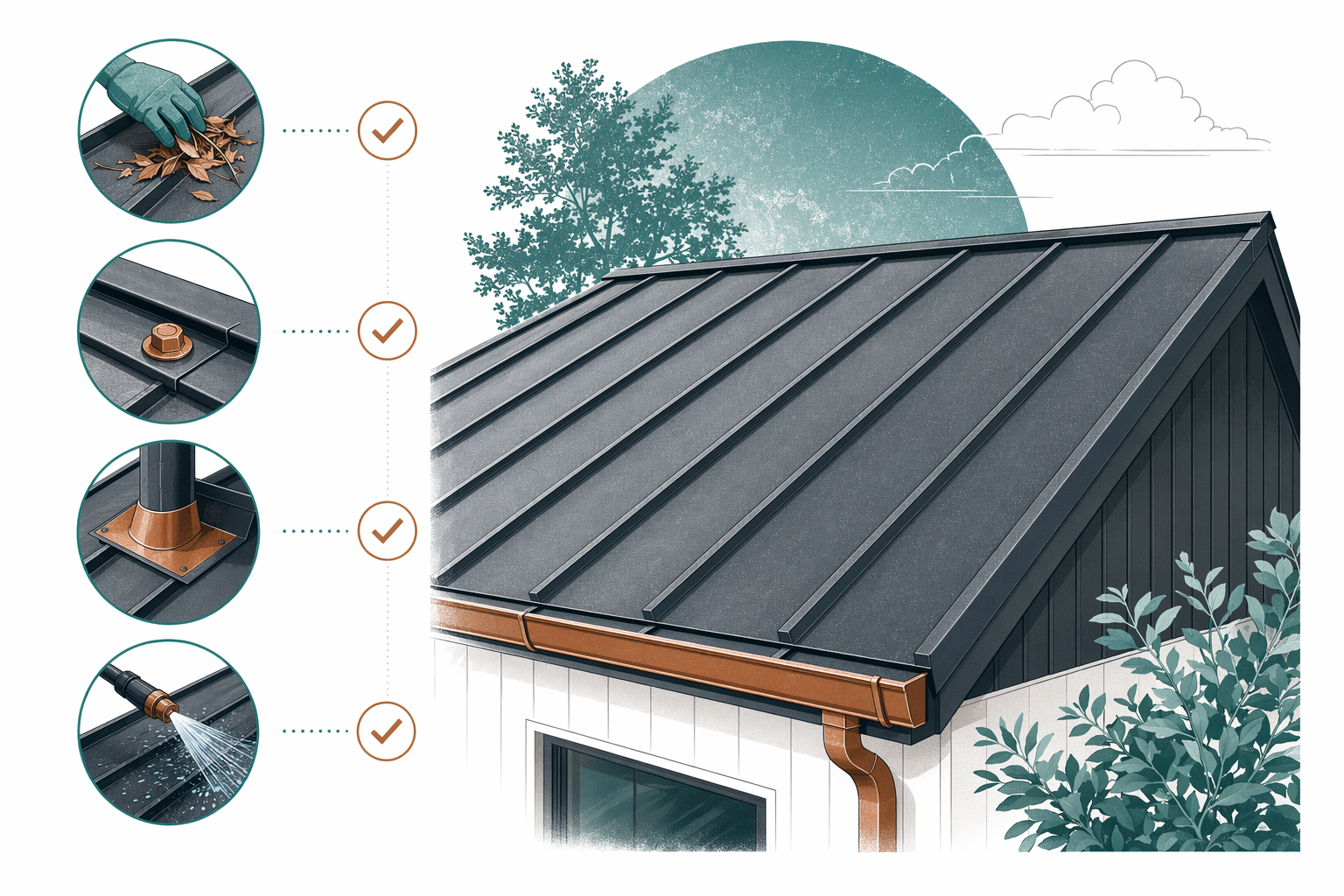
The short answer: keep it clean, inspect it, fix small issues early
A metal roof does not need constant attention. Most homeowners just need a simple routine:
- Look at it from the ground a few times a year.
- Clear leaves, branches, and other debris.
- Keep gutters and downspouts flowing.
- Check after major storms.
- Have a licensed, insured, bonded roofer inspect anything that looks bent, loose, rusted, or leaking.
That is the big picture. The goal is not to baby the roof. The goal is to stop small problems from turning into expensive repairs.
Metal can last a long time, but lifespan still depends on the metal type, gauge, coating, installation quality, weather, and maintenance. If you want a quick refresher on how long different systems tend to last, see metal roof lifespan.
One honest note: a metal roof costs more up front than asphalt in many cases, but it often lasts much longer. Typical installed ranges are roughly $5-$9 per sq ft for corrugated/ribbed metal, $9-$14 for metal shingles, and $10-$18 for standing seam, versus about $4-$8 for asphalt. Those are typical estimates, not quotes. Real price depends on roof size, pitch, the metal and coating chosen, tear-off, and your area.
What to check twice a year and after storms
A simple spring-and-fall check is enough for many homes. Add one more check after hail, high wind, heavy snow, or falling branches.
From the ground, look for:
- Panels that look lifted, dented, bent, or out of line
- Loose or missing trim at ridges, hips, edges, and around chimneys
- Rust spots, scratches, worn finish, or areas where bare metal may be exposed
- Fasteners that appear backed out on exposed-fastener systems
- Debris piles in valleys or behind chimneys
- Overflowing gutters or downspouts
- Stains on soffits, siding, or exterior walls that may point to drainage trouble
Inside the house or attic, look for:
- Water spots on ceilings or walls
- Damp insulation
- Mold or musty smells
- Daylight showing where it should not
If you have a standing seam roof, many of the fasteners are concealed, which can reduce routine trouble spots. If you have an exposed-fastener roof like some corrugated/ribbed metal, checking screw condition matters more because washers and fasteners can age over time.
Do not assume a leak is always caused by the metal panels themselves. Many roof leaks start at flashings, penetrations, skylights, vent boots, valleys, and transitions. That is why details matter as much as the main field of the roof.
What maintenance actually looks like
Most metal roof maintenance is basic housekeeping, not major repair work.
1. Remove debris carefully
Leaves, pine needles, seed pods, and branches can trap moisture. They also clog valleys and gutters. Use a soft broom or leaf blower if it can be done safely. Avoid scraping the finish with hard tools.
2. Keep gutters and downspouts clear
Poor drainage can push water where it should not go. Clean gutters regularly, especially if you have nearby trees.
3. Wash dirty areas if needed
In some areas, pollen, salt air, tree sap, mildew, or airborne grime can build up. Light washing with water and a manufacturer-approved cleaner may help. Avoid harsh chemicals, abrasive brushes, and pressure settings that could damage coatings or force water into seams.
4. Trim back branches
Branches that rub the roof can scratch the finish. Overhanging limbs also drop debris and can fall in storms.
5. Watch sealants and flashings
Sealants do not last forever. Around vents, chimneys, and skylights, aging sealant or failed flashing can cause leaks even when the panels are fine.
6. Fix scratches and corrosion early
A small scratch in the coating is easier to address than a larger rust problem later. A roofer can tell you whether touch-up is enough or a part needs replacement.
7. Re-tighten or replace failing fasteners when appropriate
This is mainly for exposed-fastener roofs. Backed-out screws, cracked washers, or wrong replacement screws can create leaks. This is a good item for a roofer to handle.
If you are still deciding between systems, maintenance is one of the real differences. Standing seam usually has fewer exposed fasteners, while lower-cost exposed-fastener systems can require more attention over time.
What not to do
This is where homeowners sometimes get burned.
- Do not walk on the roof unless you know how and it is safe. Metal can be slippery, especially when wet, dusty, frosty, or steep.
- Do not let random handymen screw into panels without a clear plan. Satellite mounts, solar attachments, holiday decorations, and other penetrations can cause leaks if done wrong.
- Do not paint, coat, or seal the whole roof just because someone says it needs it. Some coatings help in the right situation. Some are a waste of money. Some can even affect warranties.
- Do not ignore small stains or a loose trim piece. Small issues are usually cheaper to address early.
- Do not power-wash aggressively or use abrasive tools. You can damage the finish and shorten roof life.
- Do not assume every dent means failure. Cosmetic dents and functional damage are not always the same thing. A licensed roofer can help you understand the difference.
If someone tells you the roof needs major work, slow down. Get the metal type, gauge, coating, warranty, scope, and price in writing before any deposit. Verify the contractor's license and insurance yourself. Follow local permits and code. If you need help comparing companies, use a good checklist like how to vet a metal roofer.
When to call a roofer, and what to do next
Call a licensed, insured, bonded metal roofer if you notice leaking, rust that is spreading, loose panels, failed flashing, repeated fastener issues, storm damage, or anything that does not look right.
A good next-step process is simple:
- Document what you see. Take photos from the ground and inside the attic or room below if there is staining.
- Do temporary protection only if it is safe. For example, move valuables away from a drip. Do not climb a steep or wet roof.
- Get more than one estimate. Compare scope, materials, and warranty terms line by line.
- Verify credentials yourself. Confirm license status and active insurance. Ask whether the roofer is experienced with your specific roof type.
- Ask permit questions. Repairs and replacements may require local permits depending on where you live. Read more about metal roof permits.
If storm damage may be involved, contact your own insurer and follow their process. Do not trust anyone who promises a certain claim outcome. No one can honestly guarantee that. A licensed roofer may document visible roof conditions, but claim decisions belong to the insurer.
If your roof is older, leaking, or you are trying to compare repair versus replacement, SeamRidge can help you get matched with local roofers at no cost to you. We are a free matching service. You compare estimates, you choose who to hire, and you hold the final payment.
In plain English
Check your metal roof from the ground twice a year, keep debris and gutters clear, look again after storms, and call a licensed, insured, bonded roofer if you see leaks, rust, loose parts, or storm damage. Get the scope, materials, warranty, and price in writing, verify credentials yourself, and compare estimates before you decide.